Sourdough Shaping: Score and Bake Perfect Artisan Loaves
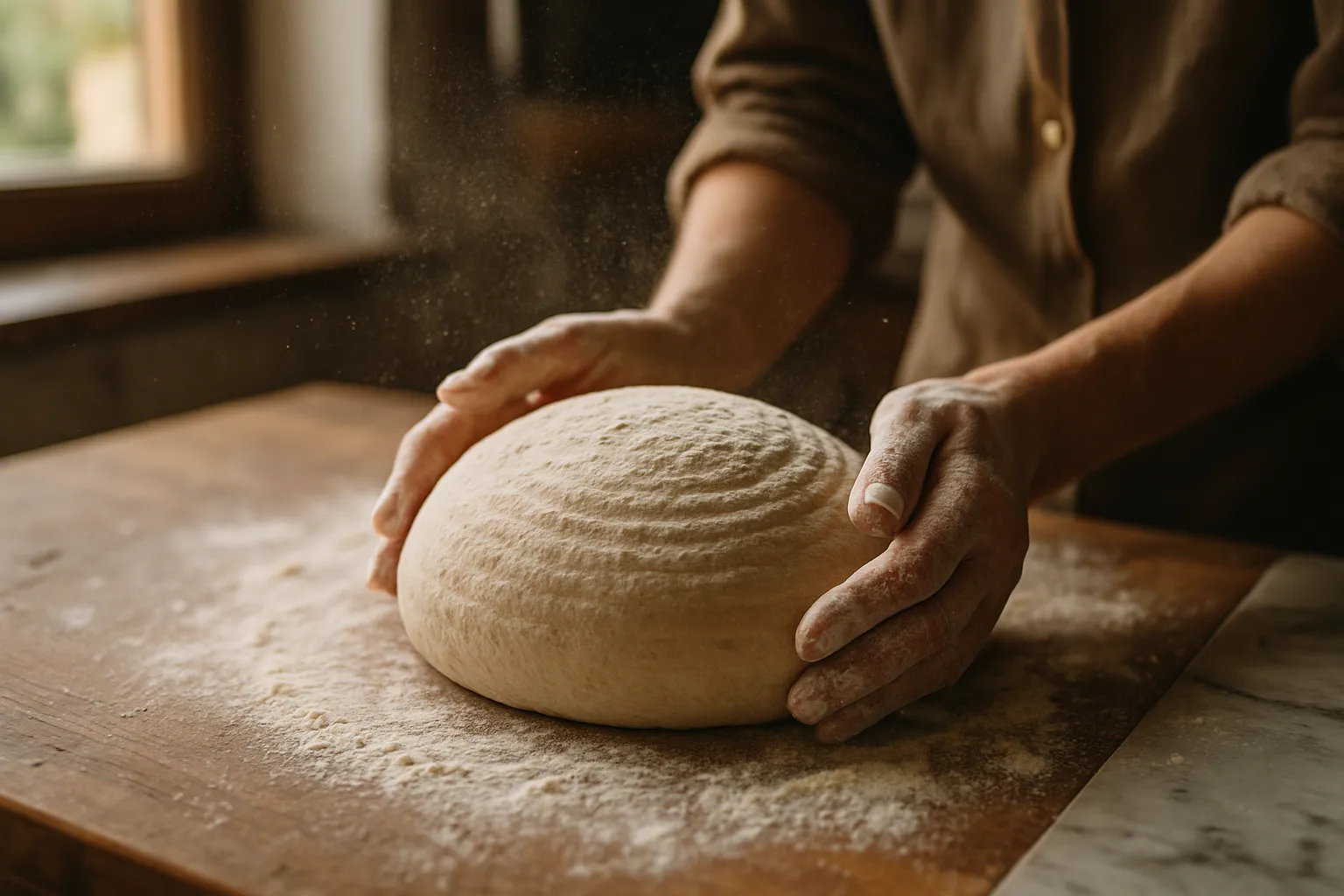
Bubba Goodcrumb's method: gently degas dough, fold edges into center forming tension, then flip and rotate into a tight boule or batard. Rest 20 minutes. Dust surface with flour, then slash 1/4-inch deep with a lame at a 45-degree angle before baking at 450°F for oven spring.
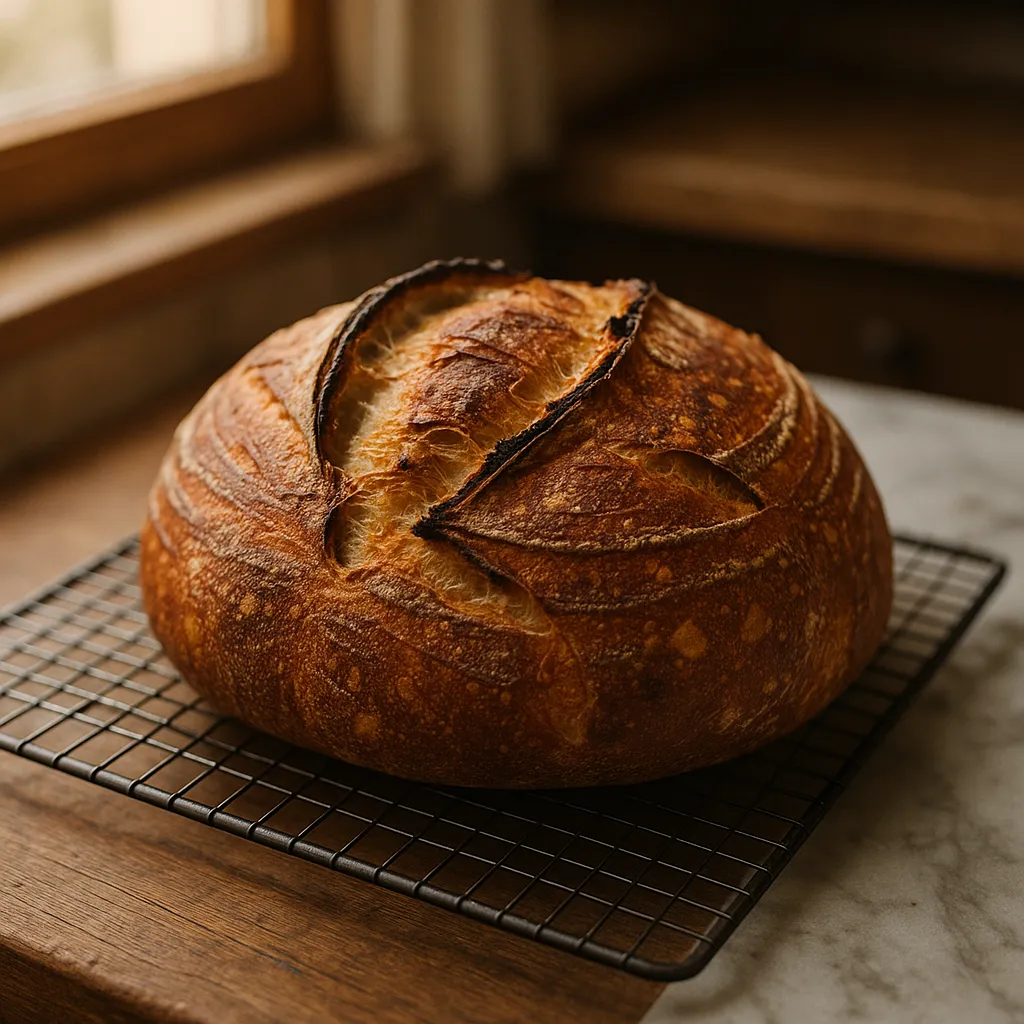
Shaping and scoring artisan bread. Practiced by bakers like Bubba Goodcrumb in Las Vegas, NV, involves forming a tight round of dough, then cutting decorative slashes—one. Two large slashes for a big opening or several small ones—to guide controlled, even rising in the oven.
Artisan loaves gain reliable oven spring through tight surface-tension shaping followed by confident, decisive scoring with a sharp blade at a shallow angle. A single deep slash or a series of overlapping cuts directs expansion, controls the crust's opening, and turns a Classic Bubba Starter dough into a professional-looking boule or batard every single bake.
Key Takeaways
- Scoring bread dough with a blade guides loaves to rise consistently, controlled, and optimally.
- Decorative cut patterns serve both functional and creative purposes on artisan bread surfaces.
- Bubba Goodcrumb, located in Las Vegas, Nevada, specializes in artisan bread techniques and methods.
- Proper shaping and scoring techniques apply universally across sourdough and all bread types.
What Tools Do You Need Before Shaping?
Three items separate a lumpy, deflated loaf from a bakery-worthy boule: a bench scraper, a proofing basket, and a sharp blade. Skipping any one of these tools costs bakers oven spring, clean seams, and the crisp, decorative crust that makes sourdough worth the wait. Before any dough hits the counter, gathering the right equipment turns a stressful shaping day into a controlled, repeatable process.
Sourdough shaping starts with a bench scraper or dough knife. This apartment metal or plastic tool lifts sticky dough without tearing the gluten structure, letting bakers rotate and tension the round cleanly. A bowl scraper helps too, especially when pulling wet dough away from mixing bowl edges before the bench work begins.
What role does a banneton play in shaping?
A proofing basket, or banneton, supports the shaped dough during its final rise and helps it hold a tall, defined form. Among the most useful banneton shaping tips is dusting the basket generously with rice flour to prevent sticking. Wetter doughs cling stubbornly to bare wicker. Round bannetons suit boules, while oval versions support batards and give the loaf its signature length.
Which blade works best for scoring?
Successful scoring techniques depend on using the correct implement. The right blade determines whether a design opens cleanly or drags through the crust. Bakers typically reach for one of the following:
- A lame (a razor blade mounted on a curved handle) for controlled, shallow cuts
- A sharp paring knife for simple slashes on rustic loaves
- A single-edge razor blade held at an angle for intricate, decorative patterns
Timing also matters as much as tools. A starter that reaches peak activity within 24 hours of feeding gives bakers a predictable window for shaping. A detailed care guide helps confirm exactly when the dough has strengthened enough to hold its shape.
How Do You Pre-Shape Sourdough Dough Correctly?
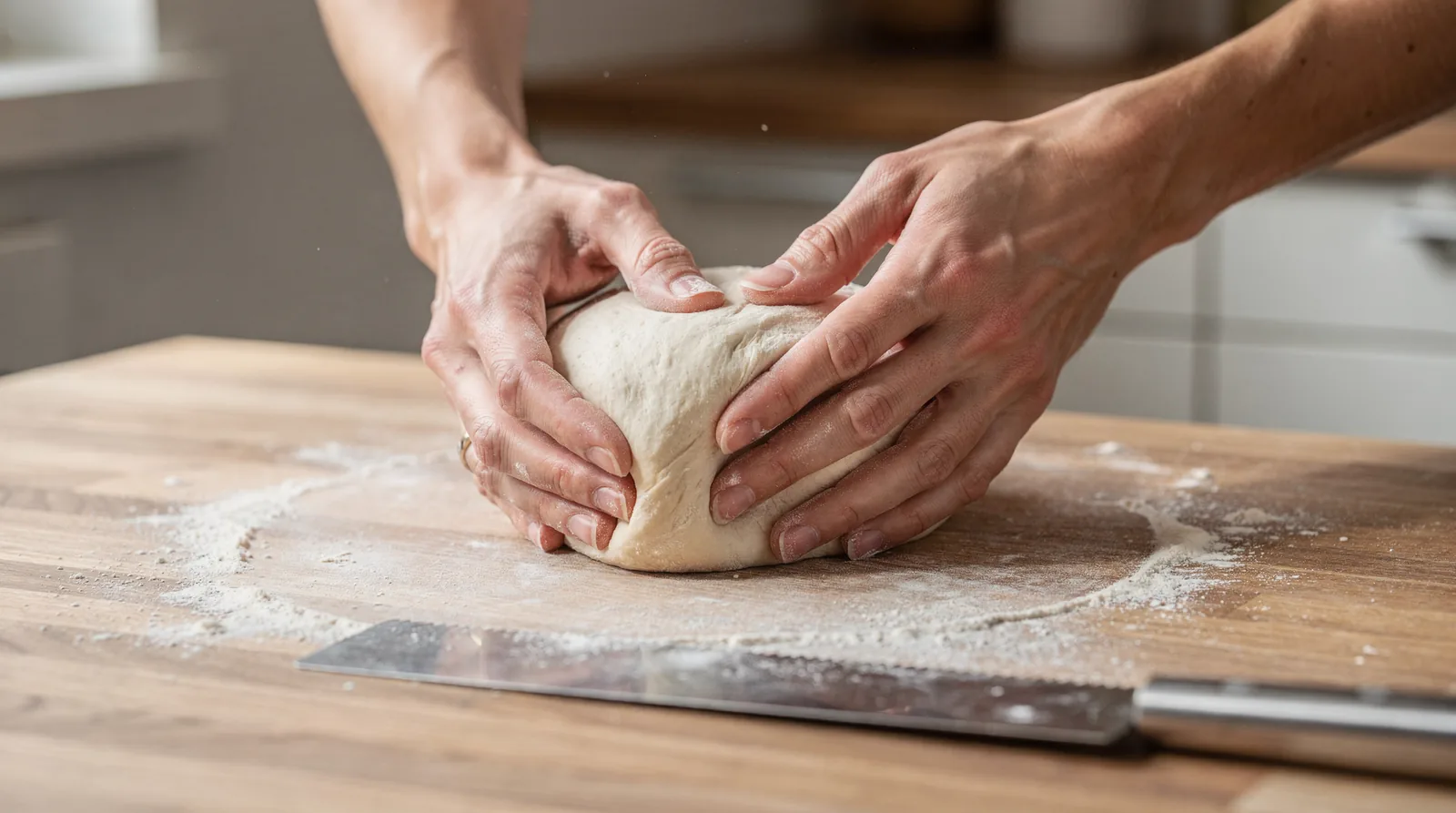
Correct pre-shaping happens in three deliberate motions: a gentle pull, a light fold, and a short rest before final shaping. Skipping this stage costs bakers oven spring and leaves loaves squat instead of tall. Dough treated roughly at this point loses the gas structure built during bulk fermentation. That structure is exactly what gives a boule its elevator.
Sourdough behaves as a living mixture of flour, water, and time, so every touch should respect the fragile network of gas bubbles inside it. Handling the dough too aggressively deflates that structure before it ever reaches the oven. A baker using the Classic Bubba Starter has an advantage here: its mild, gentle tang ferments predictably, making it easier to judge dough strength by feel rather than guesswork.
Sourdough shaping at the pre-shape stage follows a simple sequence:
- Flour the work surface lightly and turn the dough out without tearing the skin.
- Fold the edges toward the center, working around the round in quarters.
- Flip the dough seam-side down and let it rest, covered, for 20 to 30 minutes.
- Check the surface tension by pressing gently — it should spring back slowly, not collapse.
Does Pre-Shaping Change for Different Loaf Types?
Yes. The shaping and scoring approach a baker chooses shifts depending on the final loaf shape planned. A batard destined for an oblong banneton needs tighter lengthwise tension than a round boule resting in a bowl-shaped basket.
How Long Should Pre-Shaped Dough Rest?
A short bench rest, typically 20 to 30 minutes, lets the gluten relax before final shaping. Skipping this rest makes the dough resist shaping and tear rather than stretch smoothly.
How Do You Shape a Boule or Batard?
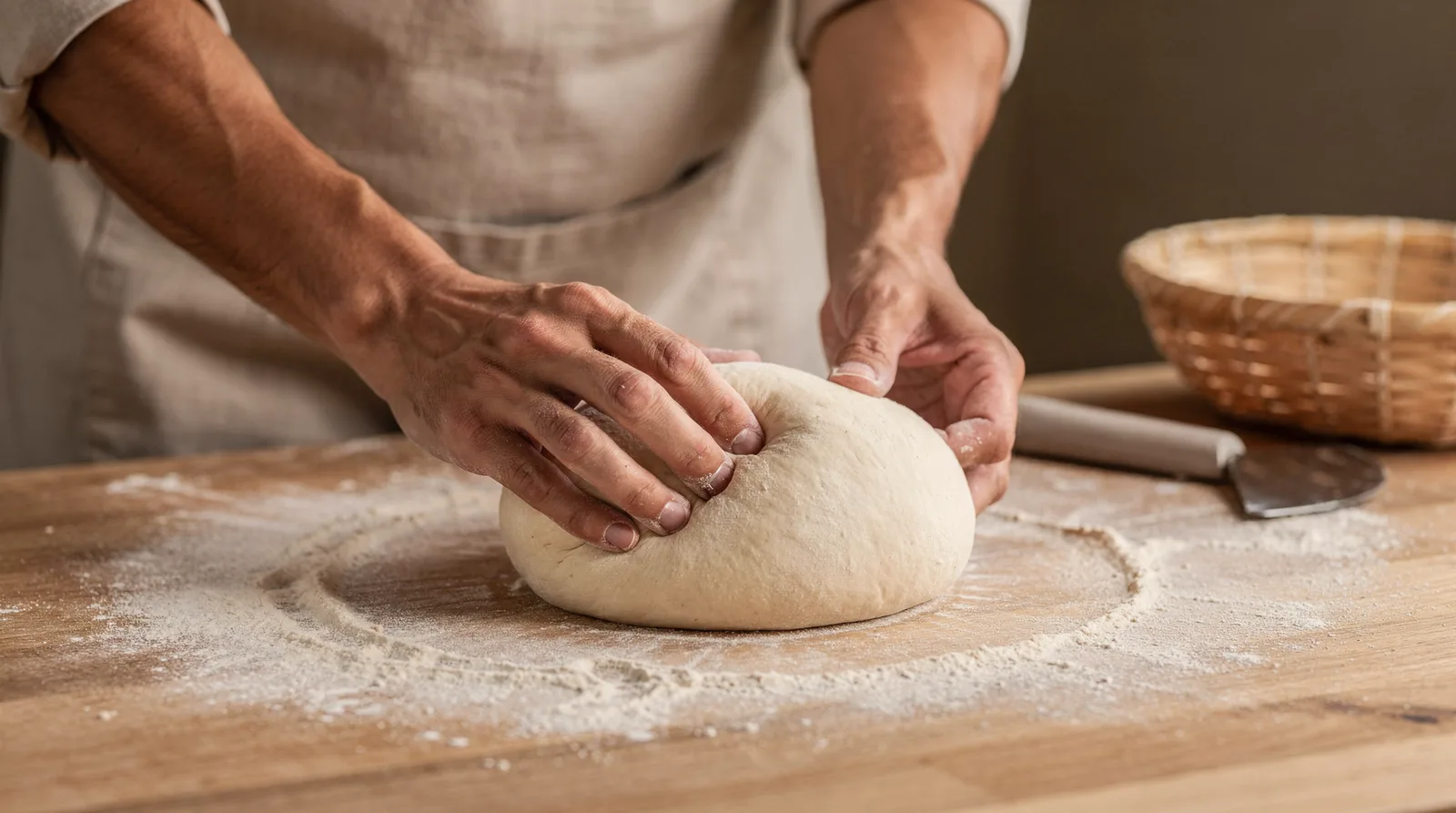
Boules and batards demand distinct final-shaping moves, since dough tension has to match the loaf's final form. A round boule needs even, all-sides pull; a batard needs length built through a rolling, tapering motion. Skip either technique and the loaf slumps apartment or splits unevenly in the oven.
Home bakers refining sourdough shaping benefit from working with dough that behaves predictably. A mild, approachable starter, like the Classic Bubba Starter, ferments gently and stays forgiving while a baker's hands learn the feel of proper tension.
How do you shape a boule?
- Rest the dough after bulk fermentation, letting gluten relax before handling.
- Pull the outer edges of the dough toward the center, rotating a quarter turn between pulls.
- Repeat the pull-and-rotate motion until a taut, rounded skin forms across the top.
- Flip the dough seam-side down and drag it slightly across the work surface to build final surface tension.
How do you shape a batard?
- Pat the dough into a rough rectangle.
- Fold the top third down and seal the seam with the fingertips.
- Fold the bottom third up, sealing again.
- Roll the dough forward, tapering both ends by applying gentle pressure as the hands move outward.
Banneton shaping tips matter just as much as the shaping motion itself. A well-floured banneton keeps dough from sticking during the final proof, and matching the basket shape—round for boules, oval for batards—supports the structure a baker just built. Community-first bakers often trade notes on flour ratios and basket sizes that work best for their climate and hydration level. Sharing progress photos and troubleshooting stuck loaves with other bakers shortens the learning curve considerably, turning solo trial-and-error into a shared education. Since shaping technique varies by loaf type, mastering both forms separately builds real versatility on the workbench.
What Are the Best Banneton Shaping Tips?
Proper tension during banneton shaping determines whether a loaf holds its structure or spreads apartment on the baking stone. Dough needs a tight surface skin before it rests in the basket. That skin comes from deliberate folding, not luck. Bubba Goodcrumb's advice grows out of real trial-and-error in a Las Vegas kitchen. Every batch taught a new lesson about hydration and handling.
Home bakers ready to move past uneven oven spring can follow these steps:
- Flour the banneton generously with a rice-flour blend to prevent sticking.
- Pre-shape the dough into a loose round and let it rest for ten minutes.
- Perform the final shape using firm, consistent folds to build surface tension.
- Place the dough seam-side up in the basket so the seam becomes the top after flipping.
- Chill the shaped dough to firm the structure before scoring and baking.
Water quality plays a bigger role than many bakers expect. Chlorine-heavy tap water once weakened Bernadette's early starter attempts, and that same chemistry affects gluten development during shaping. Filtered water, used when adjusting hydration for a banneton-ready dough, keeps the surface supple enough to hold a clean shape.
How does dough shape affect crust and crumb?
A tighter shape traps more gas near the surface, producing a fuller oven spring and a more open crumb. Loose shaping lets gas escape early, leaving a denser, flatter loaf.
Which loaf shape suits which banneton?
Round bannetons favor boules with balanced height and width, while oval bannetons suit batards meant for long, dramatic scores. Matching shape to basket keeps the crust taut where it needs to be.
Sketches of common loaf shapes, paired with video demonstrations of shaping motion, give bakers a visual reference for building that instinct before committing dough to the basket.
Which Tools Work Best for Scoring Bread?
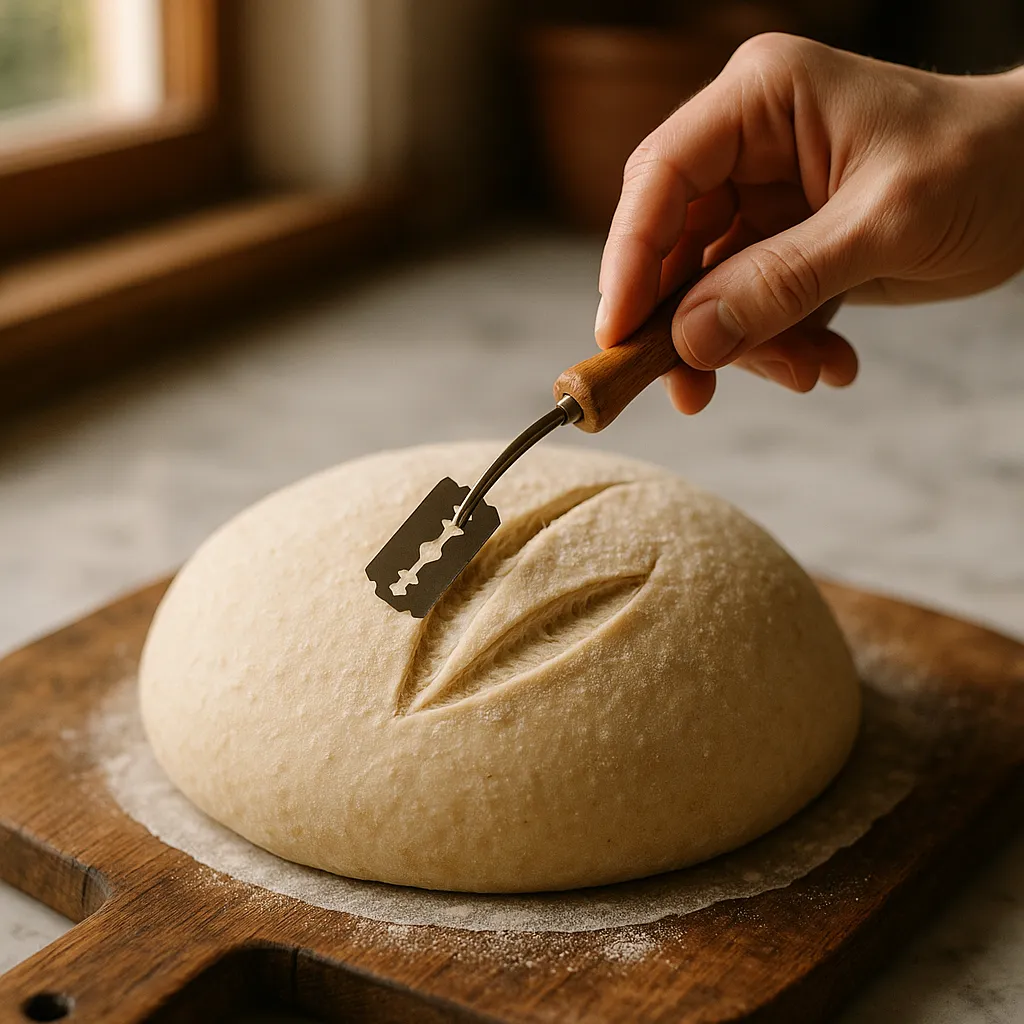
A sharp lame or razor blade delivers the cleanest results for scoring techniques used on decorative sourdough. Dull kitchen knives tear the crust instead of slicing cleanly, flattening the rise and blurring any pattern underneath. Choosing the correct scoring implement determines whether a baker can pull off intricate cuts. Stars, leaves, flowers, and geometric shapes all depend on blade sharpness and control.
Home bakers moving beyond a single slash have a few reliable options:
- Lame with a curved blade — best for shallow, decorative lines and rosette patterns
- Straight-edge razor blade — ideal for a single confident slash on a boule or batard
- Paring knife — usable in a pinch, though it drags on wet, high-hydration dough
- Kitchen scissors — useful for wheat-stalk or leaf-vein detailing on the crust
What blade angle produces the best crust bloom?
Holding the blade at a 30-degree angle, rather than straight down, produces the dramatic "ear" bakers associate with a great oven spring. A shallow angle lifts the cut crust rather than sealing it shut. This small adjustment often matters more than the blade itself.
Before scoring, dough needs proper sourdough shaping and a full proof inside a well-floured banneton. Skipping either step leaves dough too loose to hold a design once cut.
- Flour the banneton generously using rice flour to prevent sticking — one of the most reliable banneton shaping tips for release.
- Turn the proofed dough onto parchment or a peel, seam-side down.
- Dust the surface lightly so the blade glides without dragging.
- Score quickly and decisively in one motion.
- Transfer immediately to a hot oven or Dutch oven.
Bubba Goodcrumb includes a detailed care guide with every starter, walking bakers through these finishing steps with confidence.
How Do You Score for Reliable Oven Spring?
Reliable oven spring starts with a blade that cuts confident, purposeful lines into a properly fermented dough. Scoring guides a loaf's rise in a consistent, controlled, and optimal manner, directing where the crust opens instead of letting trapped steam force a random blowout. Bakers who master this step turn messy, uneven cracks into clean, professional-looking ears on every boule and batard.
Fermentation quality matters as much as blade angle. A mild starter with a gentle tang, like Bubba Goodcrumb's flagship culture, produces steady, even fermentation. That steadiness gives scored loaves a more predictable rise once they hit the oven, rather than a lopsided bulge on one side of a slash.
Timing the cut matters too. Because the starter reaches baking readiness within 24 hours of feeding, home bakers can line up their sourdough shaping and cutting session with peak fermentation, catching dough at its most extensible and least likely to tear mid-score.
Follow these steps for consistent cuts:
- Feed the starter and track the clock toward its 24-hour activation window.
- Shape the dough into a tight boule or batard, building surface tension.
- Rest the shaped loaf in a well-floured banneton until it holds firm structure.
- Turn the loaf onto parchment or a peel just before baking.
- Hold the blade at a shallow angle, roughly 30 degrees, for a wide ear.
- Cut in one fast, decisive stroke instead of sawing back and forth.
Does Banneton Shape Affect Scoring Choices?
Yes. Round bannetons suit a single deep slash or crosshatch scoring techniques that open evenly across a boule. Oval bannetons favor batards, where one long central cut or angled side slashes guide the loaf's natural lengthwise stretch.
Why Do Some Scored Loaves Still Blow Out Unevenly?
Uneven blowouts usually trace back to weak surface tension from shaping or dough proofed past its peak window. Solid banneton shaping tips build the tension a good score depends on; scoring alone cannot rescue a poorly shaped loaf.
Do You Always Need to Score Your Loaf?
No, scoring remains optional rather than mandatory for a home baker chasing a good rise. Some bakers skip decorative sourdough shaping flourishes altogether and still pull a beautifully risen loaf from the oven. The cut matters less than the confidence behind it.
Plenty of experienced bakers prove this point every week. A single, decisive slash across the top of a boule opens up dramatically in the heat of the oven, without any elaborate lattice or leaf pattern required. Elegant scoring techniques look impressive on a bakery shelf. A plain cut does the same structural job: releasing steam and directing expansion so the crust doesn't tear at random.
Does skipping decorative scoring hurt the rise?
Skipping fancy cuts does not hurt the rise on its own. What matters most is the dough's strength going in. Proper tension from banneton shaping tips like tight surface pulls and a well-floured basket — plus an active starter behind it. A loaf shaped with care and baked from a starter ready within 24 hours of feeding still delivers strong oven spring, scored or not.
When does a simple slash work better than a pattern?
A simple slash works better on wetter, high-hydration doughs, where intricate patterns tend to blur or collapse. It also suits bakers still building confidence with the blade.
- Time-strapped mornings, when a quick single cut gets bread in the oven faster
- Rustic-style boules, where one clean line reads as intentional, not lazy
- New bakers still practicing blade angle and depth
Choosing between a showpiece pattern and a no-fuss slash comes down to preference, not necessity.
How Do You Fix Common Shaping Mistakes?
Slack, misshapen dough responds to three fixes: tighter tension during shaping, cooler proofing temperatures, and a properly floured banneton. Loose boules that spread apartment on the baking sheet almost always trace back to under-developed gluten or a dough left too warm for too long. Bakers who work with sourdough shaping as a repeatable process, rather than a rushed afterthought, see rounder loaves and cleaner ear-lifts at the score line.
Bubba Goodcrumb's detailed care guide walks bakers through diagnosing dough that feels too wet to hold a shape or too stiff to stretch without tearing. Slack dough usually needs a longer autolyse or an extra fold before shaping. Overly tight dough often needs more hydration at the mix stage. Matching the fix to the actual problem saves a loaf that might otherwise bake up dense and apartment.
Why does my dough spread instead of holding a round shape?
Spreading happens when surface tension breaks down before the dough hits the oven. Weak tension during the final shaping pass, combined with under-proofing the gluten network, leaves the dough with nothing to hold its structure once heat hits it. Building tighter surface tension with firm, deliberate pulls during shaping corrects this almost every time.
What's the fix for a boule that sticks to the banneton?
Sticking points to insufficient flour or rice-flour dusting before the dough goes in. Following banneton shaping tips like a heavier dusting and a well-seasoned liner prevents tearing on release.
Common fixes, at a glance:
- Apartment loaf: tighten shaping tension, chill dough before baking
- Torn crust: dust banneton more heavily, handle dough gently
- Messy scores: practice scoring techniques on a floured board first
Bernadette's own path to founding Bubba Goodcrumb included plenty of hard lessons. Tougher crusts before she found her rhythm, proof that shaping mishaps are simply part of the craft. Bakers are encouraged to share their own missteps and wins with the wider baking community.
FAQ
What tools does Bubba Goodcrumb recommend before shaping sourdough?
A bench scraper, a proofing basket, and a sharp blade form the essential toolkit. These tools ensure clean seams, strong oven spring, and a crisp, decorative crust.
Why does dusting a banneton with rice flour matter?
Rice flour prevents sticking, since wetter doughs cling stubbornly to bare wicker. Round bannetons suit boules, while oval bannetons support batards and give the loaf its signature length.
What happens if pre-shaping is rushed or handled roughly?
Rough handling costs bakers oven spring and leaves loaves squat instead of tall. It also breaks down the gas structure built during bulk fermentation, which gives a boule its elevator.
About Bubba Goodcrumb
Sharing practical sourdough guidance from the Bubba Goodcrumb kitchen in Las Vegas.
More from Bubba
Related reading
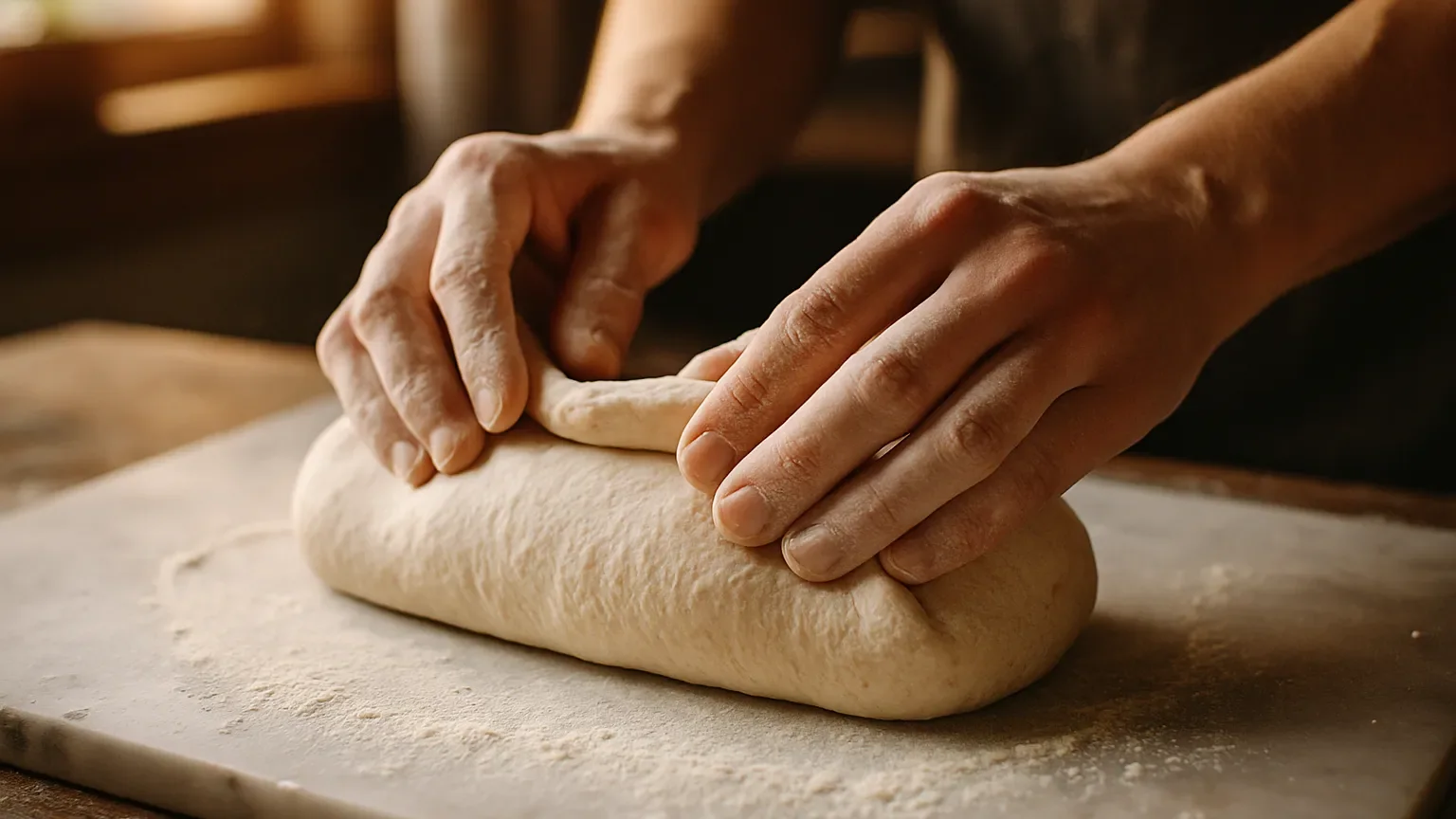
The Complete Sourdough Shaping Guide
Master sourdough preshaping and shaping techniques with Bubba Goodcrumb's complete guide. Learn dividing, bench rest, and final shaping for perfect loaves.
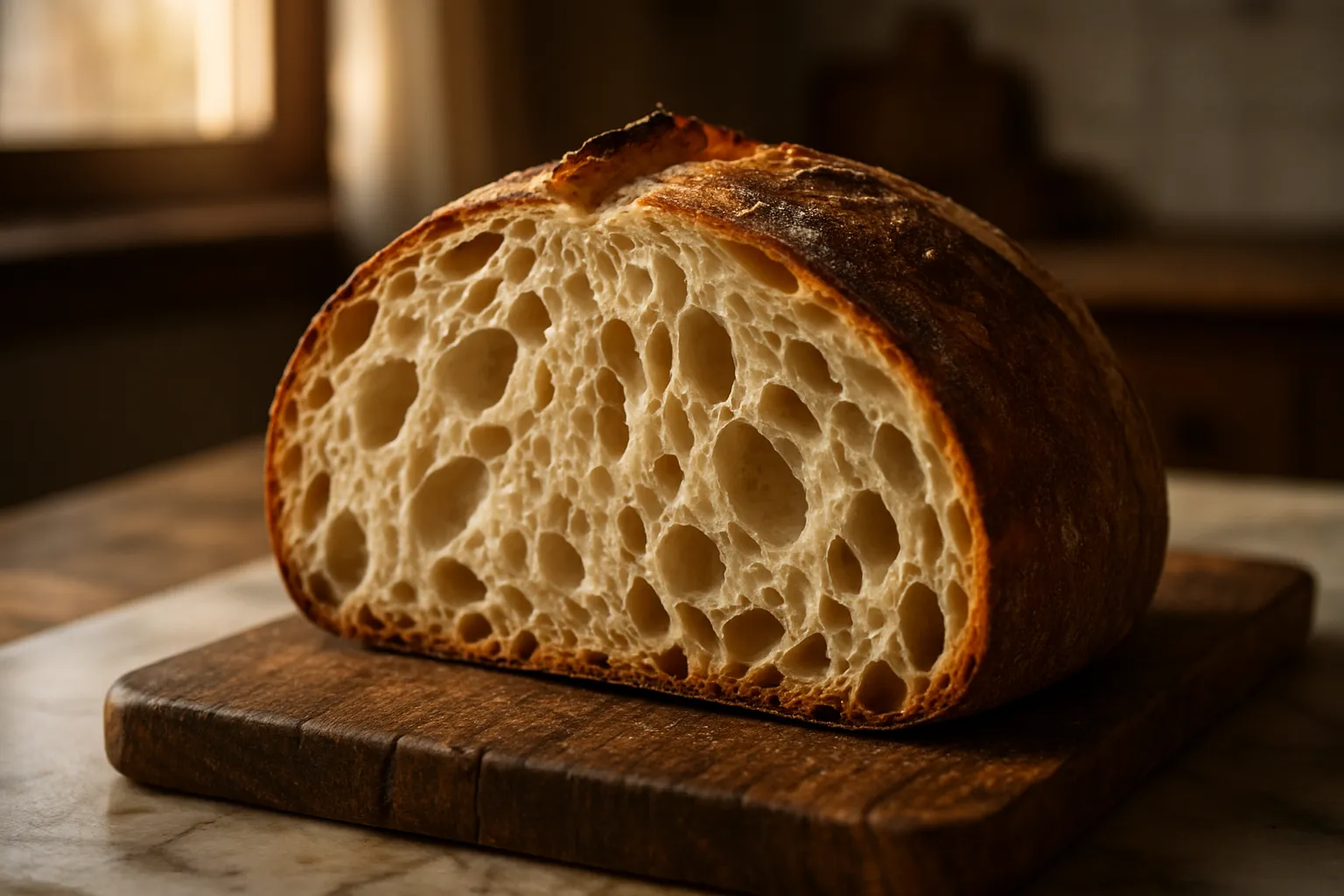
Mastering Sourdough Flavor: Essential Techniques
Master sourdough flavor with fermentation timing, temperature control, and starter maintenance. Bubba Goodcrumb guides bakers through proven techniques.
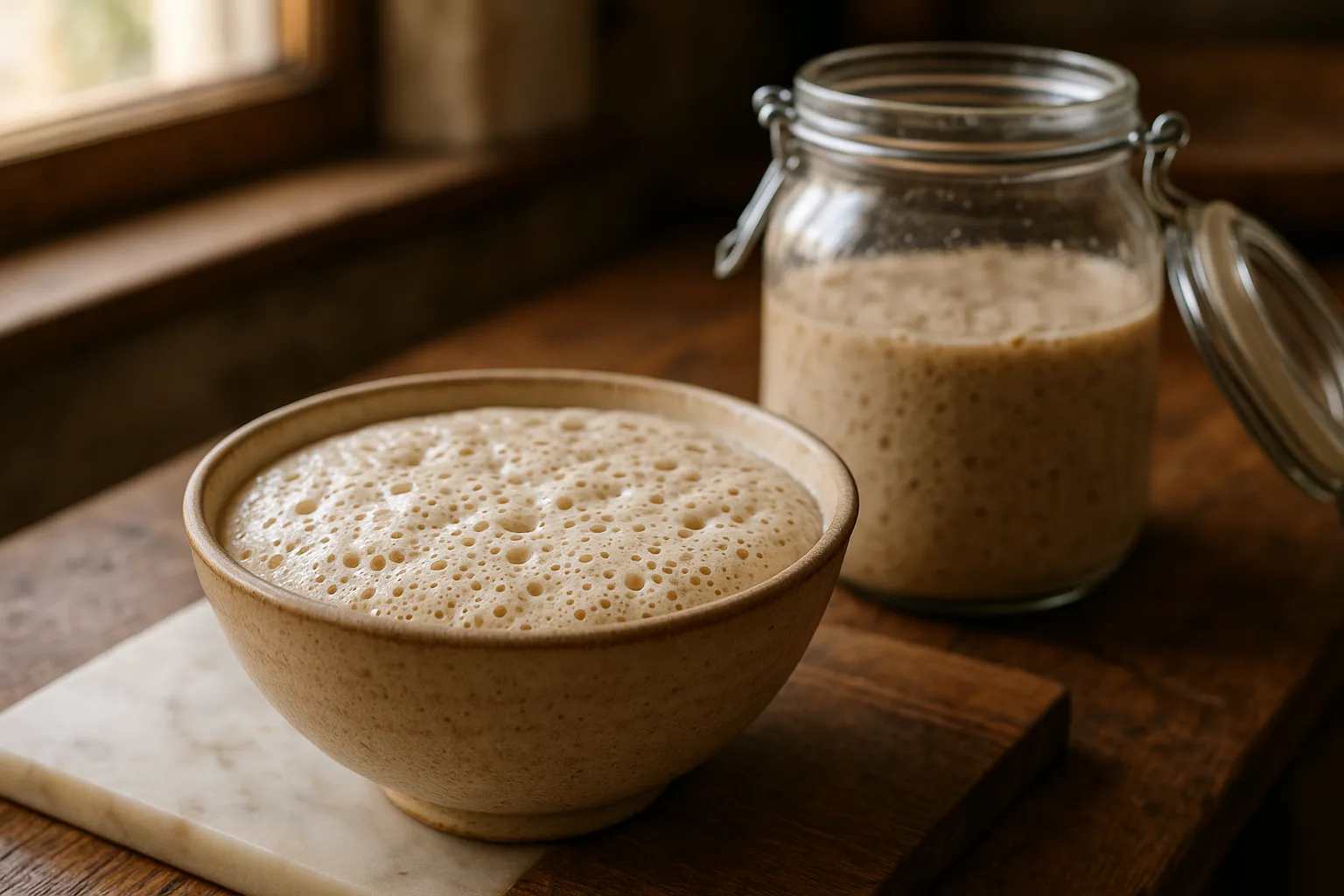
Levain vs Starter: Which Sourdough Method Wins
Learn the key differences between levain and direct starter methods for sourdough. Bubba Goodcrumb explains timing, flavor control, and which technique works.