Basic Sourdough Recipe for Beginners
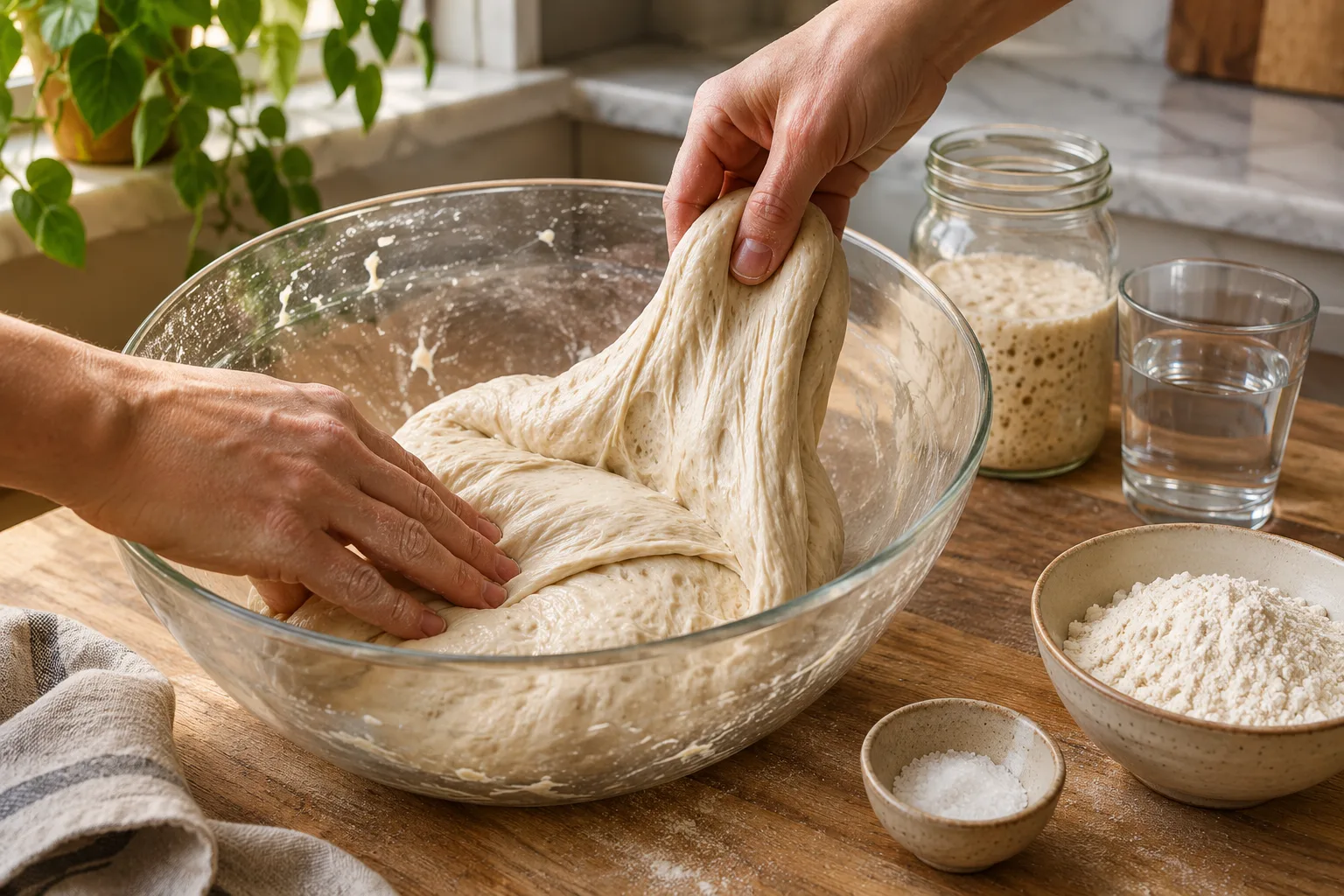
Basic Sourdough Recipe for Beginners
A loaf can look perfect in the oven, then collapse when you cut it. This basic sourdough recipe helps beginners avoid that disappointment with clear weights, simple timing, and a few useful visual cues. Combine 500g bread flour, 350g water, 100g active sourdough starter, and 10g salt. Mix, rest, ferment, shape, chill, and bake the sourdough bread in a hot dutch oven. Making sourdough bread this way gives you a reliable path to homemade sourdough bread. For beginners, making sourdough bread becomes easier when each stage has a clear visual cue.
This sourdough bread uses five simple ingredients and basic tools. You need a bowl, a spoon, parchment paper, and a kitchen scale. An active sourdough starter does the leavening work. The dough gets an autolyse, a bulk rise, several gentle folds, a final rise, and an overnight rest before baking. That overnight proofing helps the dough develop flavor while you sleep, making homemade sourdough bread easier to plan.
Key Takeaways From This Guide
- This sourdough bread recipe uses bread flour, water, salt, and active sourdough starter.
- A kitchen scale makes each sourdough bread bake more consistent.
- The dough should rise noticeably during bulk fermentation, but it does not need to double.
- A dutch oven traps steam and helps sourdough bread develop a crisp crust.
- Filtered water, patient timing, and a lively sourdough starter support a better rise.
The Recipe Works Because It Keeps the Process Simple
Simplicity makes this sourdough recipe forgiving. A basic sourdough recipe needs a few measured ingredients, time, and patience. It does not require professional skill. Watch the dough, feel its strength, and look for a steady rise instead of following the clock alone. This beginner sourdough recipe keeps making sourdough practical, while easy sourdough methods help beginners sourdough bread feel less intimidating. An easy beginner sourdough recipe can make the first bake feel more manageable. The result is artisan sourdough made simple.
Bubba Goodcrumb's Classic Bubba Starter reaches baking readiness within 24 hours of feeding, depending on conditions. A healthy sourdough starter gives the dough a dependable rise and a mild, familiar flavor. The yeast and bacteria in the sourdough starter produce gas and acids as they feed on flour. A beginner sourdough starter gives new bakers a clear place to begin, and a beginner sourdough starter recipe can establish a steady feeding routine.
- Feed the sourdough starter until it looks active and bubbly.
- Use a clean bowl for mixing and fermentation.
- Mark the dough level on the bowl so you can track the rise.
- Keep the bowl covered during each rest.
Starter Quality Supports a Predictable Bake
Consistency at the beginning prevents many early failures. Bubba Goodcrumb prepares live cultures with care, and each sourdough starter arrives with guidance for feeding and use. A dependable sourdough starter removes one major variable from a first loaf. The included instructions turn a starter bread recipe into a repeatable routine. They also make an easy sourdough starter approachable for bakers trying a basic sourdough starter recipe. Bakers sometimes call this culture a sourdough yeast starter, though it is a natural starter rather than packaged yeast.
Some bakers search for a sour dough starter or a sour bread starter when they are learning. The name varies, but the goal remains the same: an active sourdough starter with enough strength to make sourdough bread rise. A gluten free sourdough bread starter follows a different flour routine, while sourdough yeast is the natural leavening culture used here.
Ingredients and Tools for an Easy Loaf
Five pantry staples form the dough. Bread flour provides structure, while water hydrates the flour. Fine salt seasons the sourdough bread and slows fermentation slightly. The sourdough starter supplies wild yeast and bacteria. A little time allows gluten to develop and the dough to rise. A sourdough bread mix can simplify measuring, but this recipe uses separate ingredients so you can adjust each one. Sea salt can replace fine salt when measured by weight, and choosing the best flour for sourdough depends on the texture you want.
- 500g bread flour, or a blend of all purpose flour and whole wheat flour
- 350g filtered water, adjusted slightly for your flour
- 100g active sourdough starter
- 10g fine salt
- Rice flour for dusting, if using a proofing basket
- A large bowl for mixing
- A second bowl for holding the shaped dough
- A kitchen scale for accurate flour and water weights
- Parchment paper for transferring the dough
- A lame or sharp scoring blade
- A dutch oven with a lid
All purpose flour works well for a softer dough, while bread flour usually gives more chew. Whole wheat flour adds color and flavor but can make the dough feel heavier. Rye flour ferments quickly and can strengthen a sourdough starter, but too much rye flour changes the texture. Rice flour keeps dough from sticking to a lined bowl because it absorbs less water than wheat flour. For many home bakers, the best bread flour for sourdough balances strength with a pleasant chew, while all purpose flour remains a forgiving choice.
A Mild Starter Fits a Beginner's Schedule
A mild culture with gentle tang suits new bakers. Bubba Goodcrumb's flagship sourdough starter keeps the finished sourdough bread approachable rather than sharply sour. The live yeast and bacteria give the dough fermentation power. For a first loaf, avoid changing the flour blend, water amount, and starter feeding routine at the same time.
Olive oil is not required for this lean loaf, but a small amount can soften the dough and crust. If you use olive oil, add 5g with the water. Brush the bowl with olive oil when the dough feels sticky, or rub olive oil on your hands before folding. Olive oil also helps prevent sticking during a long rise. Keep olive oil away from the scoring surface, where it can make the blade drag.
Mix the Dough and Complete the Autolyse
Start by combining the sourdough starter, water, and flour in a large bowl. Stir until no dry flour remains. The dough will look rough and shaggy. Cover the bowl and let it rest for 30 minutes. This rest is the autolyse. It lets the flour hydrate and allows gluten strands to begin forming. During this stage of making sourdough, early proofing begins as the flour and culture settle together.
- Place the water and sourdough starter in the bowl.
- Add the flour and mix until no dry flour remains.
- Cover the bowl during the autolyse.
- Wait 30 minutes before adding salt.
- Feed the sourdough starter and wait until it is bubbly and active.
- Stir the sourdough starter and water in the bowl.
- Add flour and mix by hand until the dough looks shaggy.
- Cover the bowl and complete the autolyse.
- Add salt and mix until it disappears into the dough.
The autolyse builds strength before fermentation begins. A second autolyse is not necessary for this sourdough bread, but a short rest after adding salt can make the dough easier to handle. Keep the bowl covered so the surface does not dry.
Autolyse Builds Dough Strength
During autolyse, flour fully hydrates and gluten begins to form without kneading. The dough may still feel sticky, but it should become smoother after the next rest. This simple autolyse gives a basic sourdough recipe more flexibility.
Bulk Fermentation Creates the First Rise
Bulk fermentation is the stage when the mixed dough rests before shaping. The sourdough starter feeds on the flour's natural sugars, while yeast and bacteria create carbon dioxide and mild acids. The dough should rise gradually. A warm kitchen may shorten the process, while a cool kitchen may need more time. Let the dough bulk ferment until its texture shows steady activity. During the bulk rise, look for bubbles and a lighter feel rather than relying only on elapsed time.
- Keep the dough in a covered bowl during bulk fermentation.
- Look for a rise of about 50 to 75 percent, not necessarily a full doubling.
- Check for bubbles along the bowl and a smoother dough surface.
- End bulk fermentation when the dough feels lighter and holds its shape briefly.
A basic sourdough recipe treats bulk fermentation as active work, not idle waiting. Gentle folds strengthen gluten, spread warmth, and help the dough hold the gas that makes sourdough bread rise. The dough may rise in small stages, so use its texture and volume together. Good proofing depends on reading those changes rather than relying on a timer. A second look at the bulk rise before shaping can prevent an underdeveloped loaf.
Stretch and Fold Builds Structure
Use a stretch and fold every 30 minutes during the first two hours. Complete four rounds of stretch and fold, then leave the dough covered. Each stretch and fold should feel gentle. Pull one edge upward, fold it across the center, rotate the bowl, and repeat.
- Wet your hands lightly.
- Lift one side of the dough for the first stretch and fold.
- Fold that edge over the center.
- Rotate the bowl and repeat the stretch and fold three more times.
- Cover the bowl and let the dough rest.
- Repeat the stretch and fold after 30 minutes.
After the final stretch and fold, the dough should hold more tension. A reliable sourdough starter helps the dough rise evenly, but temperature still controls the pace. Let the dough rise until it looks aerated and slightly domed.
Shape the Dough and Finish the Final Rise
Turn the dough onto a lightly floured surface. A bench scraper helps lift and turn the dough without tearing it. Shape it into a round boule by folding the edges inward and creating surface tension. A boule should feel taut but not tight. Overworking the dough can push out the gas that supports the rise. A second bench scraper can help clean flour from the work surface after shaping.
- Divide the dough only if making more than one boule.
- Pre-shape each boule and let it rest for 20 minutes.
- Fold the edges inward to create a smooth boule.
- Place the boule seam-side up in a rice flour-dusted bowl.
- Cover the bowl before the final rise.
Proof the shaped sourdough bread at room temperature until it looks puffy. A banneton can support the boule during this proofing, and a second banneton is useful when preparing two loaves. Then refrigerate it overnight. The cold rest slows the rise, deepens flavor, and makes scoring easier. If the dough rises too far, it may spread when turned out. If it barely rises, give it more time. This easy sourdough approach makes making sourdough less rushed, and it helps produce homemade sourdough bread with a steadier shape. An easy homemade sourdough routine leaves room to adjust the timing.
Shaping Creates a Stable Boule
Shaping turns slack dough into a round boule that can hold its form in the oven. Tuck the edges underneath and keep the smooth side facing up. A well-shaped boule traps gas and gives sourdough bread a taller rise.
Score and Bake the Loaf
Place parchment paper on the counter before turning out the chilled dough. Turn the boule onto the parchment paper and dust away excess rice flour. Use a bread lame to make one confident slash. A lame guides the expansion of sourdough bread and helps the crust open in a planned place. The bread lame should be clean and sharp before scoring.
- Use a cold boule for cleaner scoring.
- Hold the lame at a shallow angle.
- Cut about 1cm deep.
- Move the lame in one quick motion.
- Transfer the dough on parchment paper to the dutch oven.
Preheat the dutch oven to 450°F. Put the dough and parchment paper into the dutch oven, cover it, and bake for 40 minutes. Remove the lid and bake until the crust turns deep golden brown. The covered dutch oven traps steam, while the uncovered dutch oven lets the crust dry and darken. A hot dutch oven also supports oven spring, which is the final rise in the oven. Strong proofing before baking can give oven spring more room to develop.
For another bake, a dutch oven can replace a baking stone because its lid holds steam close to the dough. The dutch oven should be fully heated before loading. Always place parchment paper under the loaf when the pot is hot. Let the dutch oven cool before washing it.
Scoring Controls Expansion
A sharp lame gives trapped gas an intentional route out. A sluggish sourdough starter may produce a flatter loaf, while an active sourdough starter can create a strong rise. Score immediately before baking so the dough does not lose its shape.
Common Problems and Practical Fixes
Water quality, flour choice, and timing can all affect a sourdough starter. Filtered water often helps when chlorine slows fermentation. Measure flour with a kitchen scale rather than volume cups. Keep notes about room temperature, feeding time, and each rise so the next sourdough bread bake becomes easier to read. If you are making sourdough regularly, a float test can offer one extra clue about starter readiness, though the rise and aroma matter too. Sea salt works in the dough as long as you weigh it accurately.
- Use filtered water if the sourdough starter seems inactive.
- Use all purpose flour for a softer, easier-to-handle dough.
- Add whole wheat flour gradually because it absorbs more water.
- Use rye flour in the sourdough starter when you want faster activity.
- Do not judge the rise by time alone.
- Do not cut sourdough bread before it cools completely.
A sourdough starter may need several feedings before it reaches a strong rise. A gentle starter may not look aggressive, but it can still make good sourdough bread. If the dough feels dense, extend bulk fermentation. If it spreads, shorten the final rise or strengthen the next dough with another stretch and fold.
Flexible Timing Keeps Baking Manageable
This sourdough recipe can fit around a busy day. Mix in the morning, complete a few rounds of stretch and fold, and let the bowl rest while you work. Shape in the evening, then refrigerate the boule. The next day, score with a lame and bake in the dutch oven. That flexible proofing schedule makes making sourdough easier and supports another loaf of homemade sourdough bread. A single loaf sourdough recipe also keeps the schedule simple when you are baking for one household.
- Morning: feed the sourdough starter and mix the dough.
- Late morning: complete the stretch and fold rounds.
- Afternoon: let the dough rise during bulk fermentation.
- Evening: shape the boule and place it in a covered bowl.
- Next morning: score and bake the sourdough bread.
Storage, Serving, and Future Bakes
Cool the sourdough bread completely before slicing. Early slicing releases steam and can make the crumb gummy. Store the loaf at room temperature for two to three days in a towel or cut-side down on a board. Freeze extra slices in a sealed bag. A few minutes in a warm oven can revive the crust.
- Keep the crust exposed instead of using an airtight plastic bag.
- Slice only what you plan to serve.
- Freeze extra sourdough bread for later toast.
- Use leftover pieces in sourdough discard recipes such as croutons.
Keep the sourdough starter active with regular feeding. Bakers can order online through Bubba Goodcrumb, and the dehydrated cultures ship nationwide for reactivation at home. An active sourdough starter supports future sourdough bread, discard bakes, and sourdough discard recipes. The same care keeps artisan sourdough made simple for future loaves.
Once the basic loaf feels familiar, try a sour dough recipe with rye flour or whole wheat flour. Rye flour adds earthy flavor, while whole wheat flour brings a fuller crumb. You can also use olive oil in a softer dough or adapt the method for sourdough sandwich bread. Sourdough sandwich bread usually uses more hydration control and a tin, but the same sourdough starter principles apply. For a heartier variation, try sourdough whole wheat bread with part of the flour replaced by whole wheat flour.
- Use rye flour for a deeper fermented flavor.
- Use whole wheat flour for a heartier loaf.
- Try olive oil when you want a softer crust.
- Save extra culture for sourdough discard recipes.
- Use a boule for a round table loaf or a tin for sourdough sandwich bread.
Quick Comparison of Flour Choices
| Flour | Result | Best use |
|---|---|---|
| All purpose flour | Soft, flexible dough | Beginner sourdough bread |
| Bread flour | Chewier crumb and stronger structure | A tall boule |
| Whole wheat flour | Fuller flavor and darker crumb | Partial flour blend |
| Rye flour | Earthy flavor and active fermentation | Sourdough starter feeding |
| Rice flour | Less sticking | Dusting the bowl |
Frequently Asked Questions
What ingredients do you need for sourdough bread?
Use bread flour, filtered water, fine salt, and active sourdough starter. The dough also needs time to ferment and rise. A bowl, parchment paper, and a dutch oven complete the basic setup.
Do you need a dutch oven for sourdough bread?
A dutch oven is helpful but not mandatory. It holds steam close to the dough and supports a crisp crust. If you do not have a dutch oven, use a covered oven-safe pot and parchment paper.
How long does sourdough starter take to become active?
Bubba Goodcrumb's Classic Bubba Starter reaches baking readiness within 24 hours of feeding, depending on conditions. Look for bubbles, a pleasant aroma, and a steady rise before using the sourdough starter. A float test can provide another readiness check when the culture looks lively.
Why does my sourdough starter not rise?
Cold conditions, chlorinated water, or weak flour can slow a sourdough starter. Use filtered water, feed consistently, and give the culture time. Rye flour can encourage activity, but the sourdough starter still needs a warm place and regular care.
Can I use olive oil in this recipe?
Yes. Olive oil is optional in this lean dough. Add a small amount for a softer crumb, or use olive oil to coat your hands and bowl when handling sticky dough.
What are good sourdough discard recipes?
Sourdough discard recipes include croutons, pancakes, crackers, and flatbreads. Keep discard chilled and label the bowl so it does not get confused with an active sourdough starter. For a straightforward variation, an easy sourdough starter recipe can guide the culture before you bake. This easy recipe with sourdough starter also gives discard a useful place in the routine.
A basic sourdough loaf recipe is easiest to repeat when you observe the dough at every rise. The best beginner sourdough recipe is the one you can understand, practice, and adjust with care. For bakers searching for a beginners sourdough recipe, this method keeps the first loaf focused on simple choices.
Let the dough rise when it is ready, not when the clock says it should be.
About Bubba Goodcrumb
Sharing practical sourdough guidance from the Bubba Goodcrumb kitchen in Las Vegas.
More from Bubba
More sourdough guides to read
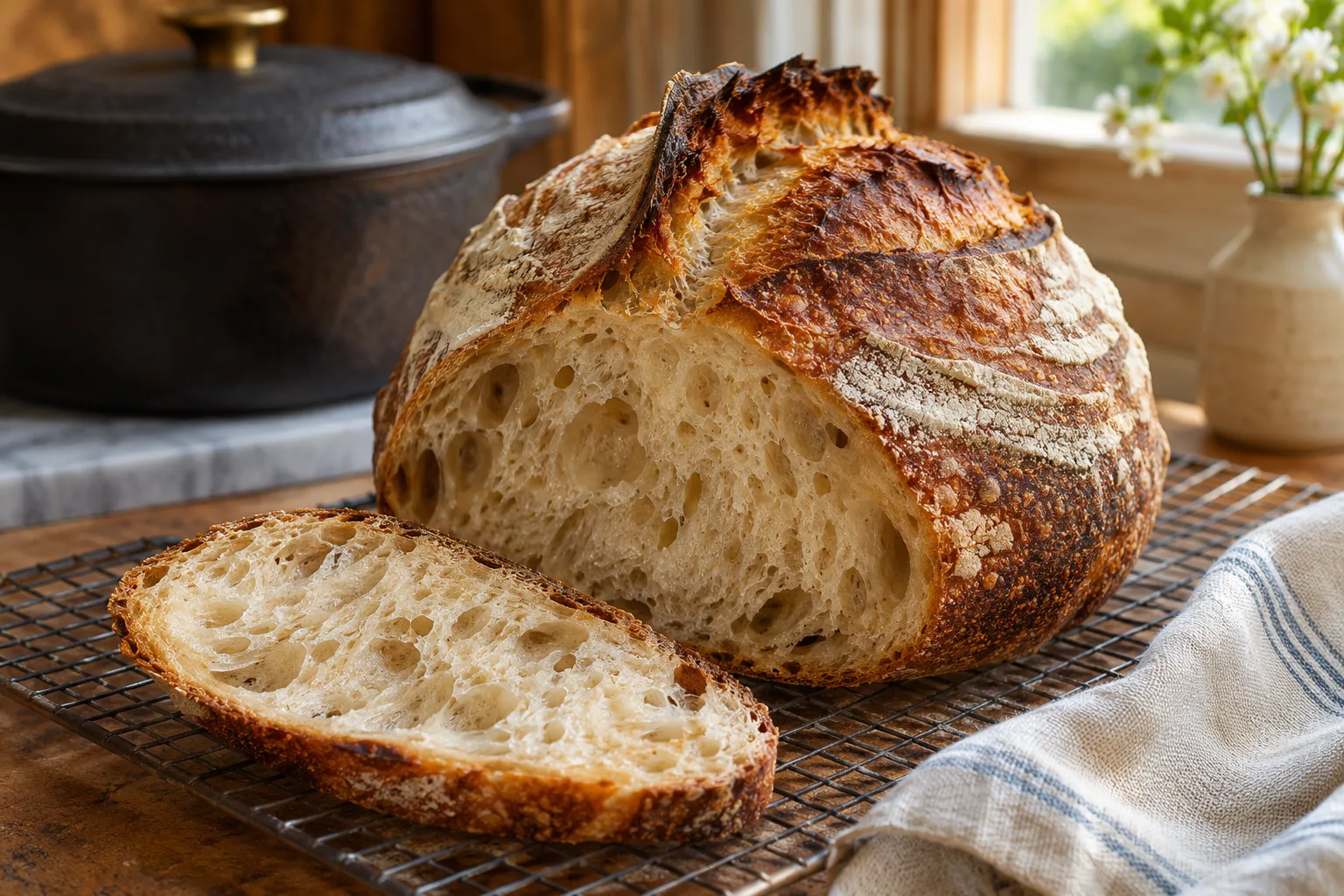
Classic Sourdough Loaf Recipe
Bake a classic sourdough loaf recipe with a lively sourdough starter, simple folds, and Dutch oven guidance for a crisp crust and tender crumb.
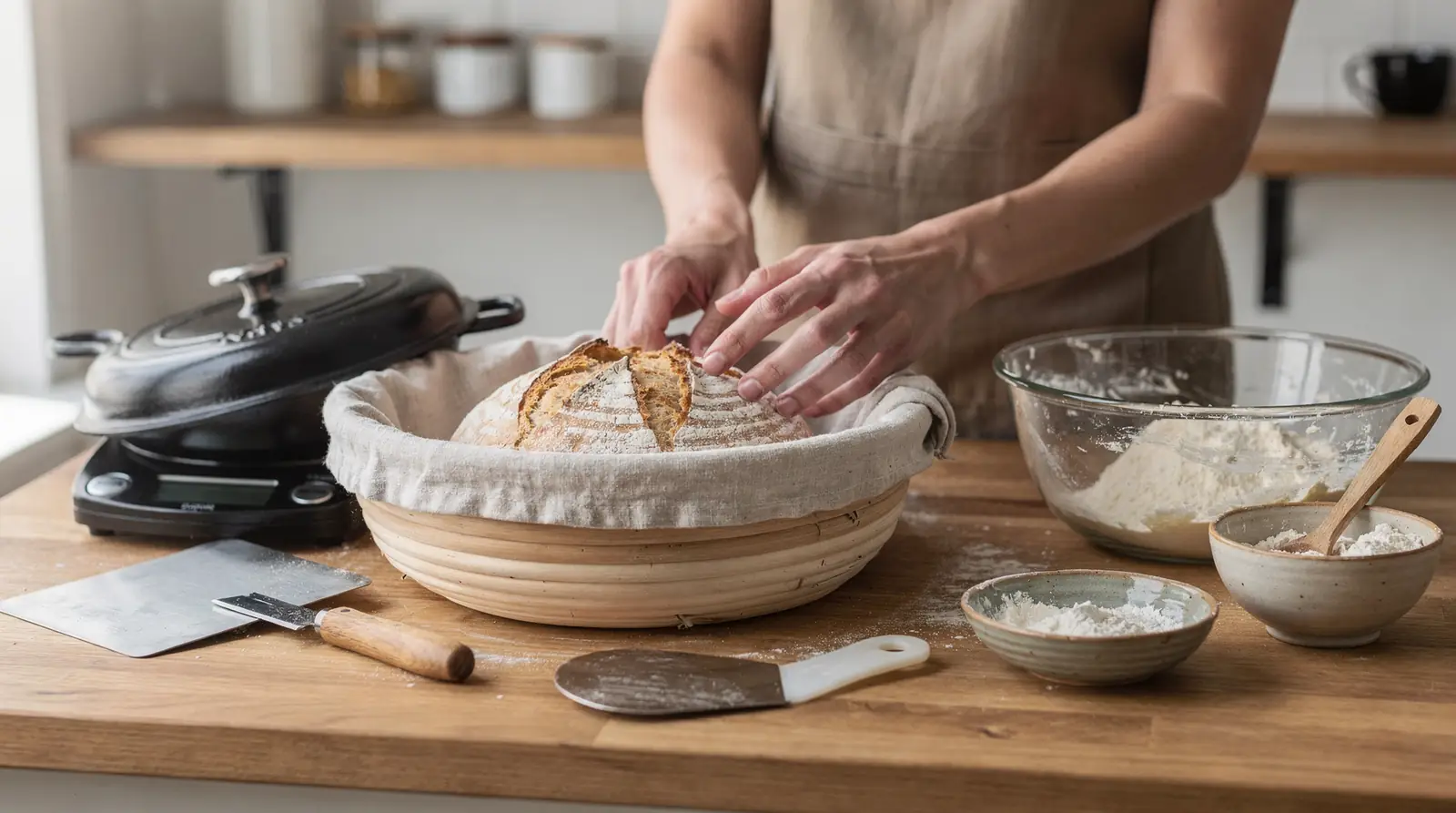
Top Sourdough Tools List for Beginners
Explore the top sourdough tools list for beginners, from scales and jars to oven gear, and bake better sourdough bread with confidence.
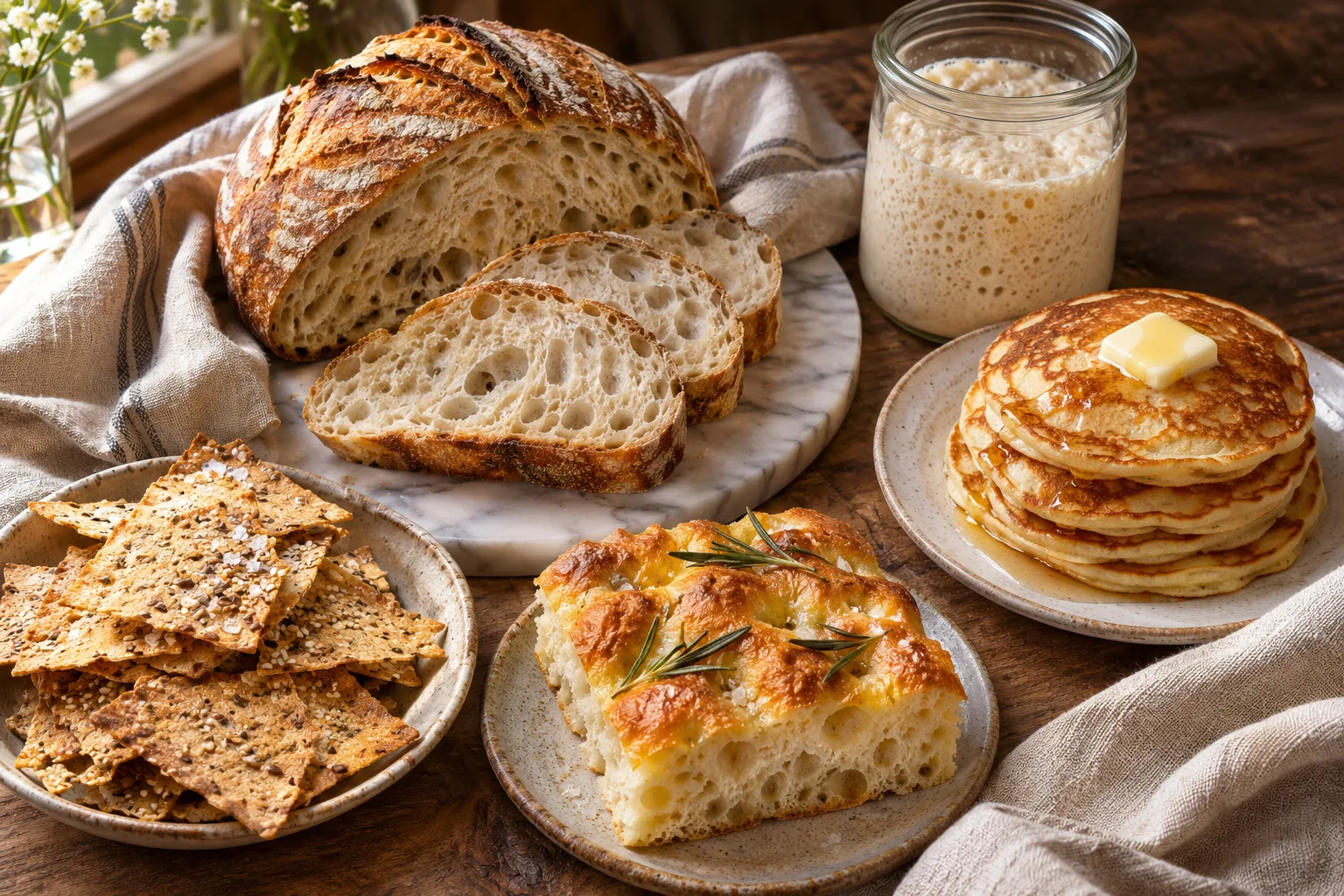
Top Sourdough Recipes: Active and Discard
Explore top sourdough recipes for active starter and discard, from sourdough bread and pizza to pancakes, crackers, pakora, and cakes.