How to Store Sourdough Starter Properly
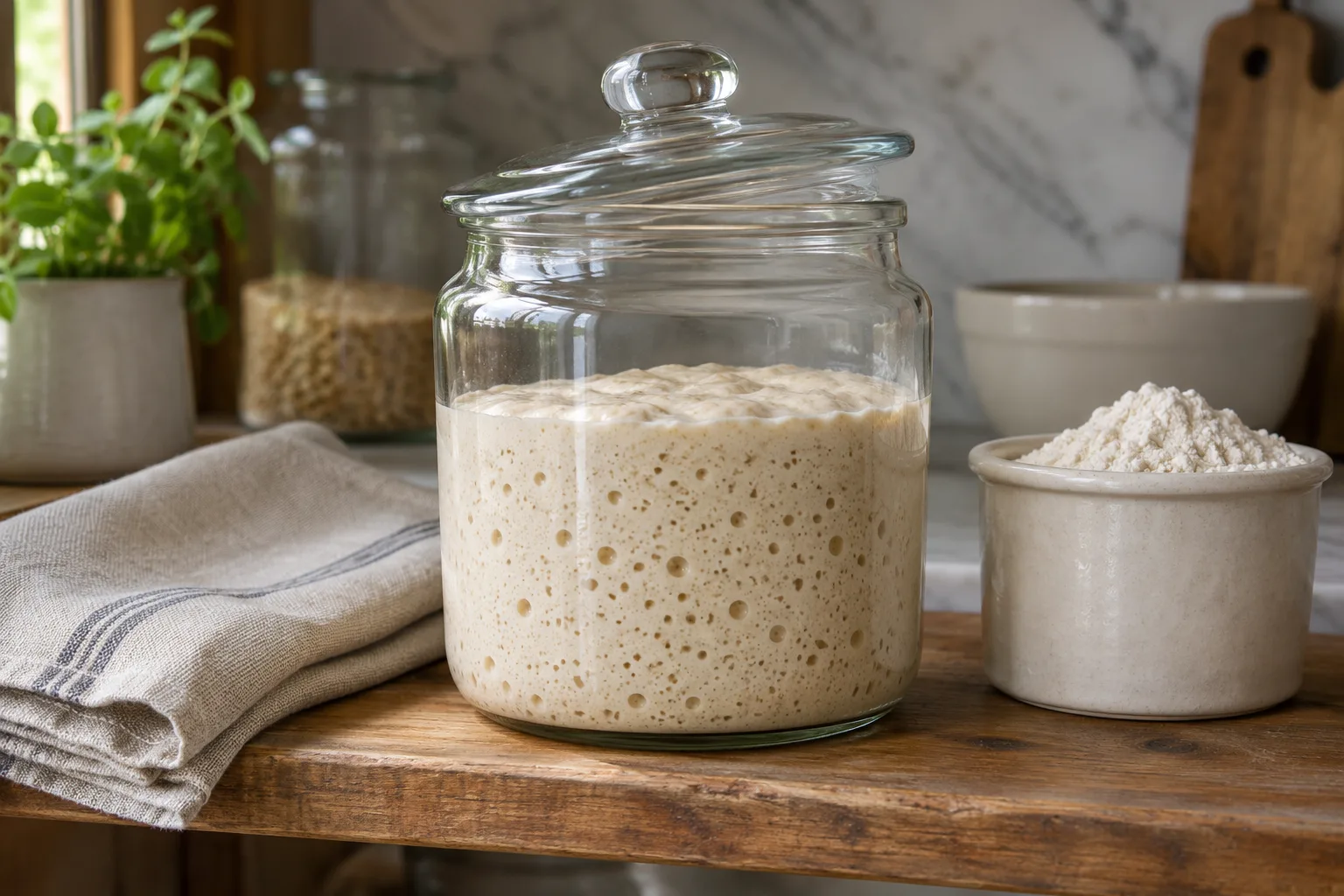
How to Store Sourdough Starter Properly
A neglected jar can greet you with hooch, a flat texture, or an unpleasant smell when you are ready to make bread. Learning to store sourdough starter properly keeps that familiar culture ready for bread, even when your schedule leaves little time for daily care. This makes baking easier when a busy week interrupts your routine.
A container with a fitted lid keeps sourdough starter dormant in the refrigerator between uses. Cold temperatures slow fermentation, so the culture may look flat, sludgy, and dull until you feed it again. A healthy starter often becomes active within a few hours and reaches full strength in about 24 hours, with a noticeable rise after feeding.
Key Takeaways From This Guide
- Store your sourdough starter in the refrigerator with a fitted lid between uses.
- Your starter remains dormant in the fridge and needs feeding when you plan to bake.
- Refrigerated starter may appear flat and sludgy, but it can recover after fresh flour and water.
- Bubba Goodcrumb recommends proper refrigeration for dependable sourdough storage at home.
Storage Gives Your Culture Time to Rest
Proper storage buys a home baker time. It covers days, weeks, and even a vacation without sacrificing the culture. Skipping storage forces daily feeding or risks losing the flavor that took time to develop. A stored starter waits patiently until the next loaf of bread is on the schedule, leaving more room for baking plans.
The core outcome is simple: long term starter storage keeps the culture alive between uses. A fitted lid, clean jar, fresh flour, and a cold refrigerator do most of the work. No daily feeding schedule is required.
A healthy starter remains useful after weeks of rest
Yes, provided the culture began as a healthy, live culture. Bubba Goodcrumb's starters ship as live cultures, built to remain viable through stretches of dormancy rather than falling apart after one missed feeding. Dormancy is a pause, not the end of the culture.
Reactivation usually takes less time than expected. A well-stored sourdough starter often returns to full strength within about 24 hours of its first feeding. That timeline makes homemade bread more manageable for people who bake in bursts, and the culture should show a steady rise before use.
- No need to monitor the jar every day
- No need to begin again with flour and water after a busy month
- A culture ready to build bread dough after a feeding cycle
Storage protects the work already invested in the culture. Patience rewards you with a starter that can support bread again.
What You Need Before Refrigeration
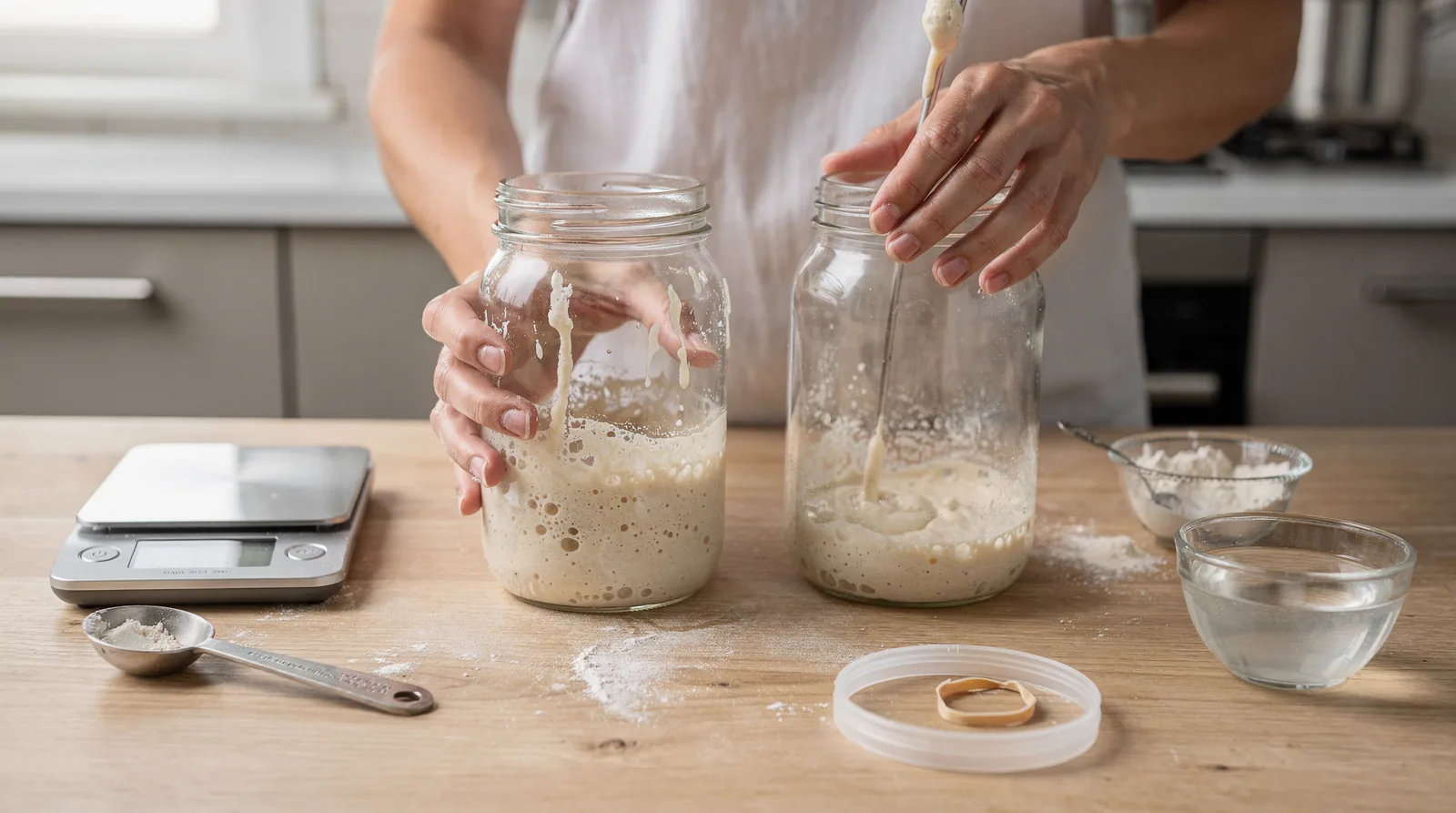
A few simple items separate a thriving culture from a moldy jar at the back of the refrigerator. To store sourdough starter safely, use a clean vessel, filtered water, and fresh flour for the final feeding. Good hydration also matters. A balanced hydration level helps the culture remain easy to revive.
Choose a jar with a fitted lid
A jar with a fitted lid, rather than a fully airtight seal, is the essential tool. Fermentation produces gas, and a slightly loose seal lets pressure escape while keeping contaminants out. A Mason jar or the crock included with a Bubba Goodcrumb starter works well. This is a practical sourdough bread storage container for a culture between feedings.
Use suitable water and flour
Tap water with chlorine and heavy minerals can weaken the culture. Feed with filtered or dechlorinated water before storage. Choose the flour already recommended in your care guide. Bread flour, whole wheat flour, or rye flour can each support a lively culture when used consistently.
Before placing the jar in the refrigerator, gather:
- A clean jar with a fitted, not airtight, lid
- Filtered or dechlorinated water
- Fresh bread flour or another recommended flour
- Whole wheat flour or rye flour if your feeding routine calls for it
- The care guide included with your Bubba Goodcrumb starter
The guide explains storage and revival step by step. Bubba Goodcrumb starters are prepared to handle travel and rest during long term starter storage. Getting the flour, water, and hydration right makes refrigeration easier for bakers who work around a busy calendar. An internal visit to Bubba Goodcrumb can provide more information about the starter itself. A suitable sourdough storage container also makes the routine easier to maintain.
Prepare the Starter for the Fridge
Preparation happens before the jar reaches the refrigerator. A properly fed culture handles cold storage better than one left hungry or over-fermented. The final feeding also sets the hydration that affects texture and activity.
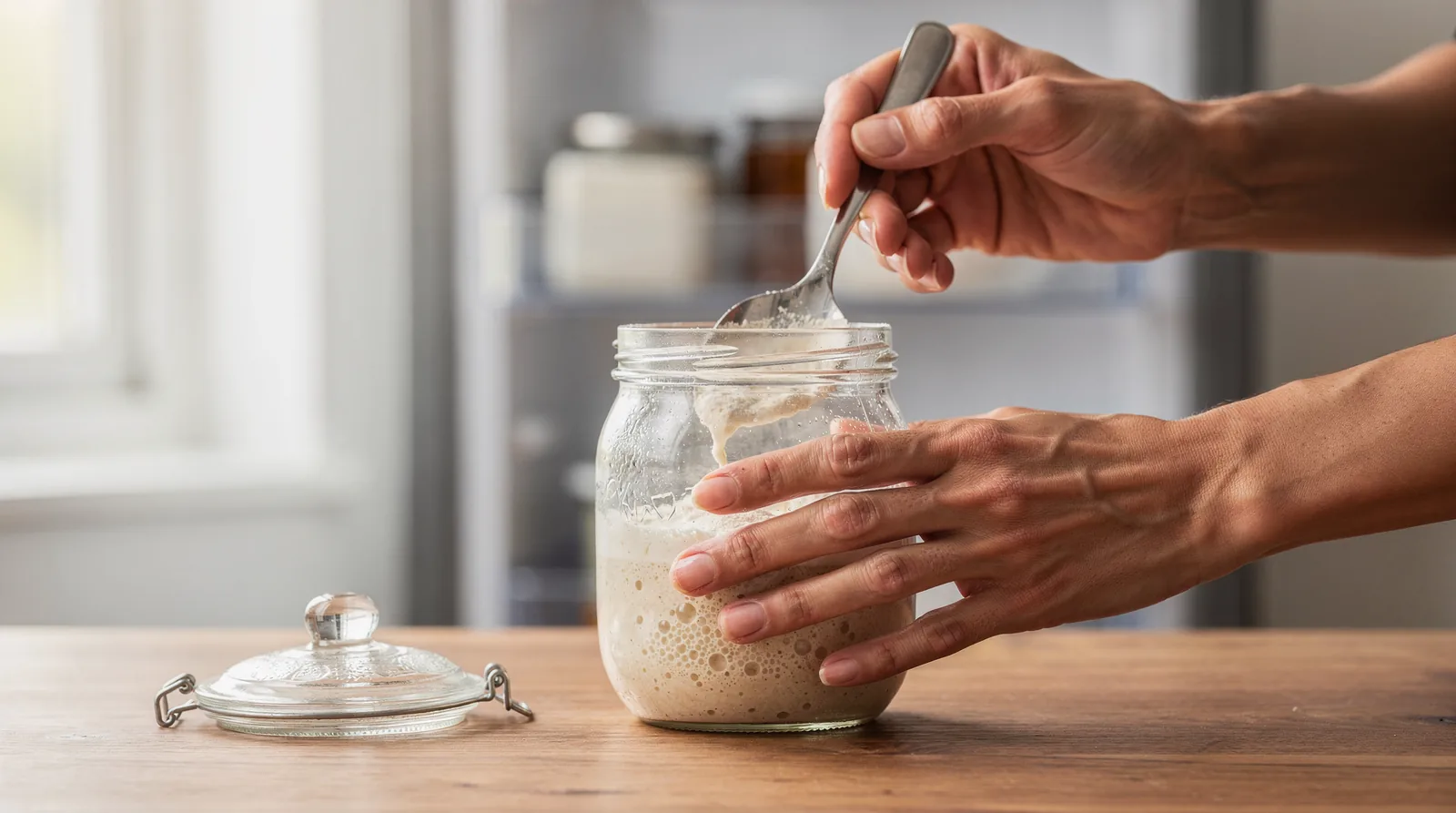
Storing a sourdough starter the right way starts with one careful feeding. Follow these steps:
- Discard part of the existing starter, keeping a small amount as the base.
- Feed the remaining culture with fresh flour and water.
- Stir the flour and water until the mixture is smooth.
- Let it sit at room temperature until you see bubbles and a little rise.
- Stir once more if the flour has settled, then close the jar with a fitted lid.
- Move the jar into the refrigerator.
Use the hydration recommended in your care guide. A feeding with bread flour gives structure, while rye flour or wheat flour can add minerals and flavor. The goal is a mild, active culture, not a fully expanded levain. This preparation supports dependable baking when the starter comes back to room temperature. A levain is usually built from starter for a specific bread recipe, while the stored culture remains your ongoing base.
Refrigerated starter may look flat and dull
Expect a change in appearance soon after chilling. Dormant culture can look flat, sludgy, and slightly dull. That appearance does not necessarily signal failure. A little hooch, the liquid that can collect on top, may also appear after a longer rest. Pour it off or stir it in according to your care guide, then feed the starter.
A fed starter remains suitable for long-term starter storage. Because most cultures become ready within roughly 24 hours of feeding, a prepared jar follows that same rhythm after it leaves the cold.
Follow a Practical Feeding Rhythm
Refrigerated starters generally need feeding about once every one to two weeks, far less often than a room-temperature routine. Cold slows fermentation and the activity of the culture. Bakers who store sourdough starter in the refrigerator trade daily attention for more flexibility.
Warmth speeds the culture's natural activity, while cold slows it. That is the logic behind choosing to refrigerate starter rather than leaving it on the counter. Feed with fresh flour and water when the care guide calls for it, and watch the hydration as the mixture changes. This keeps baking on the calendar without constant feeding.
Feeding starter from fridge storage is straightforward:
- Remove the jar before a planned bake.
- Let it warm until the mixture loosens.
- Discard a portion, then add fresh flour and water.
- Stir until smooth and watch for bubbles and lift.
- Feed again if the culture needs more time before making bread.
A short lapse rarely spells disaster. The culture may look flat, sluggish, or slightly discolored. Fresh flour, water, and the right hydration often restore it. Consistent neglect raises the risk of mold, especially when the jar, lid, or feeding tools are not clean.
Wake a Cold Starter for Bread
Warmth and fresh flour bring a dormant starter back to life. A jar pulled from the sourdough fridge may look gray or flat. That is often normal. The culture is resting, and a few deliberate steps can prepare it for bread.
- Remove the jar from the sourdough refrigerator and set it on the counter.
- Discard all but a small portion of the existing starter.
- Add the flour and water ratio recommended in your care guide.
- Stir until smooth, then loosely cover the jar.
- Let it sit at room temperature and watch for bubbles and lift.
- Feed again if the first loaf of bread is not planned for another day.
Room temperature controls the wake-up time
Reactivation often takes 2 to 3 hours in a warm kitchen and 4 to 5 hours in a cool one. A chilly room may need more patience. The starter has not failed. Its activity is simply moving slowly.
Full strength takes longer than one feeding
One feeding rarely means an immediate bake. Once the starter is bubbling again, allow about 24 hours for full strength. This gives the wild culture time to build the lift and rise expected in bread. Plan ahead instead of placing a weak starter into the oven.
Long-Term Storage Without Frequent Feeding
Yes, a healthy starter can tolerate extended rest without feeding. It enters a low-activity state as temperatures drop. The key is knowing how to store a sour dough starter correctly before leaving the counter. For anyone asking how to store sour dough, the answer begins with a healthy feeding and a clean, fitted jar.
Home bakers who move between busy weeks and baking projects need a routine that protects the culture without demanding constant attention. A mature sourdough starter carries a developed population of wild yeast and lactic acid bacteria. Helpful bacteria remain present during dormancy, while the yeast recovers after fresh flour and water. These bacteria help the culture retain its familiar character during rest. The natural acid in the culture also contributes to its familiar tang. That population remains available after dormancy.
Culture strength depends on its care
Not every starter handles neglect equally well. Strength depends on how the culture was maintained. Bubba Goodcrumb starters are live cultures designed for practical home care, including long rest periods without daily upkeep.
- Confidence to skip a feeding during a busy week
- Fewer wasted flour and water discards
- A culture that recovers after rest
For schedules that ebb and flow, sourdough home storage turns a chore into a simple routine. A calm sourdough home routine makes it easier to return to baking. The same approach helps anyone learning how to store sour dough bread supplies between baking days.
Drying and Freezing Offer Backup Options
Drying the culture into flakes or freezing small portions can extend storage beyond the refrigerator. Both methods preserve the culture's useful microbes. They also reduce the need to maintain flour, water, and hydration on a weekly schedule.
Drying a starter creates a shelf-stable backup:
- Spread a thin layer of fed, bubbly starter on parchment or a silicone mat.
- Let it air-dry at room temperature until brittle.
- Break the dried sheet into pieces or powder.
- Store the flakes in a sealed jar away from light and moisture.
- Rehydrate with flour and water when you plan to make bread.
Freezing works for longer pauses
Freezing is another option. Portion the starter into small containers before freezing. Thawed culture may need several feedings before it bubbles reliably. Use fresh flour and the recommended hydration during revival.
Spoilage has clear warning signs
Pink or orange streaks, a strong solvent smell, or visible mold means the culture has spoiled. Do not use it. When a dried or frozen culture fails to recover, a fresh live starter is a practical fallback.
Common Storage Mistakes to Avoid
Three habits quietly damage a resting culture: airtight lids, untreated tap water, and skipped instructions. Together, they can leave a jar sluggish, overly sour, or unsafe for the next bread.
Storing a sourdough starter correctly starts with the lid. A fully airtight seal traps gas as fermentation continues slowly. A fitted lid keeps contaminants out while allowing pressure to escape. Foodbod Sourdough recommends this type of fit as well.
Water quality matters too. Heavily chlorinated water can stress the culture before dormancy. Use filtered water for every feeding, and choose a consistent flour. Bread flour, rye flour, and whole wheat flour each behave differently, so avoid changing the flour and hydration at every feeding.
- Do not use an airtight lid
- Do not feed with heavily chlorinated water
- Do not skip the care guide
- Do not chill the jar before activity begins
- Do not use a starter with mold or unusual colors
Proper storage turns sourdough starter from a daily commitment into a flexible companion. The right jar, flour, hydration, and feeding rhythm protect the culture through active seasons and quiet rest. The same care helps you make bread with confidence, whether your dough goes into a home oven on Saturday or waits another week.
Frequently Asked Questions
How should you store sourdough starter between bakes?
Store sourdough starter in a clean container with a fitted lid inside the refrigerator. This is the best way to store sour dough bread preparation supplies between uses. Cold temperatures keep the culture dormant until you feed it again.
Does a starter remain useful after weeks in the fridge?
Yes. A healthy sourdough starter can remain viable through dormancy. Fresh flour, water, and suitable hydration usually restore activity after several feedings.
How long does a dormant starter take to become active?
A well-stored starter often returns to full strength within about 24 hours of its first feeding. It should show bubbles and lift before you use it for bread.
What is the best way to store sour dough bread?
For baked bread, let the loaf cool fully, then keep it in a breathable bread bag or wrapped at room temperature for short-term use. A freezer offers better quality for longer storage. This advice differs from storing sour dough starter, which belongs in a fitted jar in the refrigerator. If you are deciding how to properly store sourdough bread, protect the cooled loaf from excess moisture while keeping it at room temperature for short use.
How do you store starter in the fridge?
Searches for how to store starter in fridge, storing sour dough starter, and sourdough storage all point to the same basics: feed the culture, stir it smooth, use a fitted lid, and chill it after activity begins. Readers also search for maurizio leo and maurizio leo when comparing sourdough guidance, but your included care guide should remain the first reference for this starter. If you wonder how to store your sourdough bread, remember that baked loaves need different care from the starter itself.
Whether you call it a levain, a sourdough starter, or a home culture, thoughtful rest keeps it ready for the next loaf. Store the culture well, and it will meet you at the oven door.
About Bubba Goodcrumb
Sharing practical sourdough guidance from the Bubba Goodcrumb kitchen in Las Vegas.
More from Bubba
More sourdough guides to read
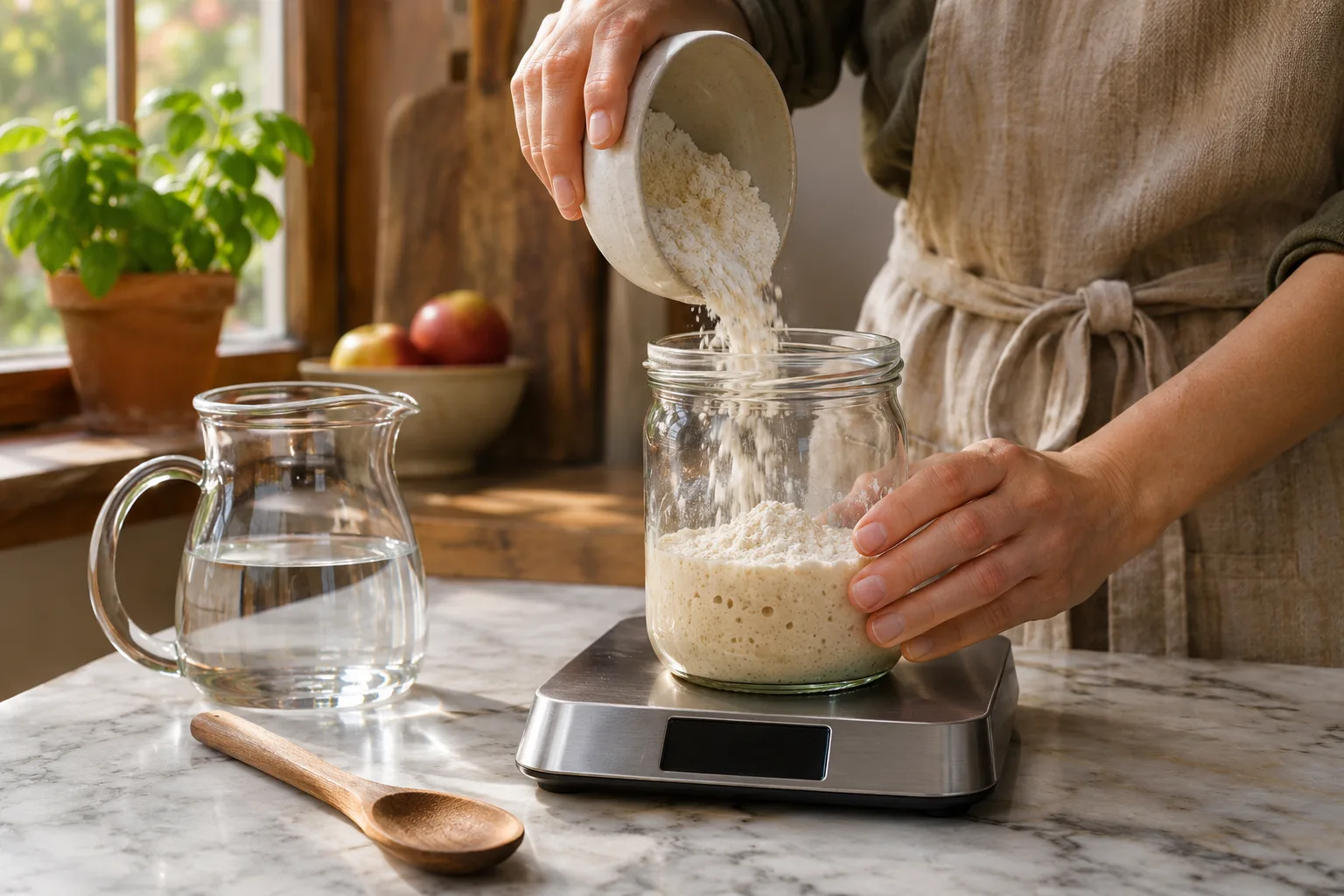
How To Feed Sourdough Starter Daily and Weekly
Learn how to feed sourdough starter daily or weekly with Bubba Goodcrumb's practical routine for healthy, flavorful bread baking.
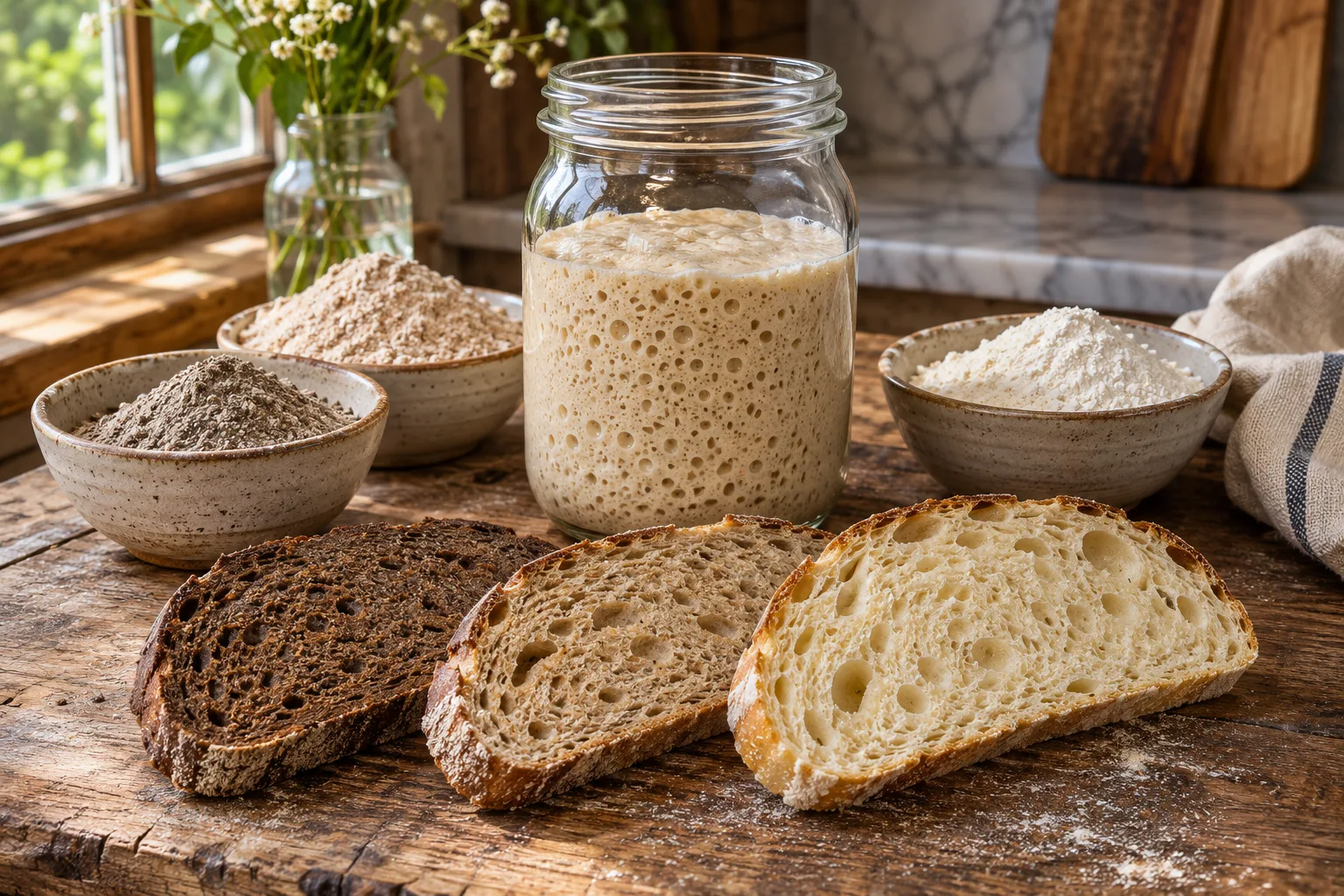
Sourdough Starter Strain Flavor Guide
Discover how wild yeast strains, flour type, and fermentation conditions shape sourdough flavor. Bubba Goodcrumb explains the science behind starter tang.
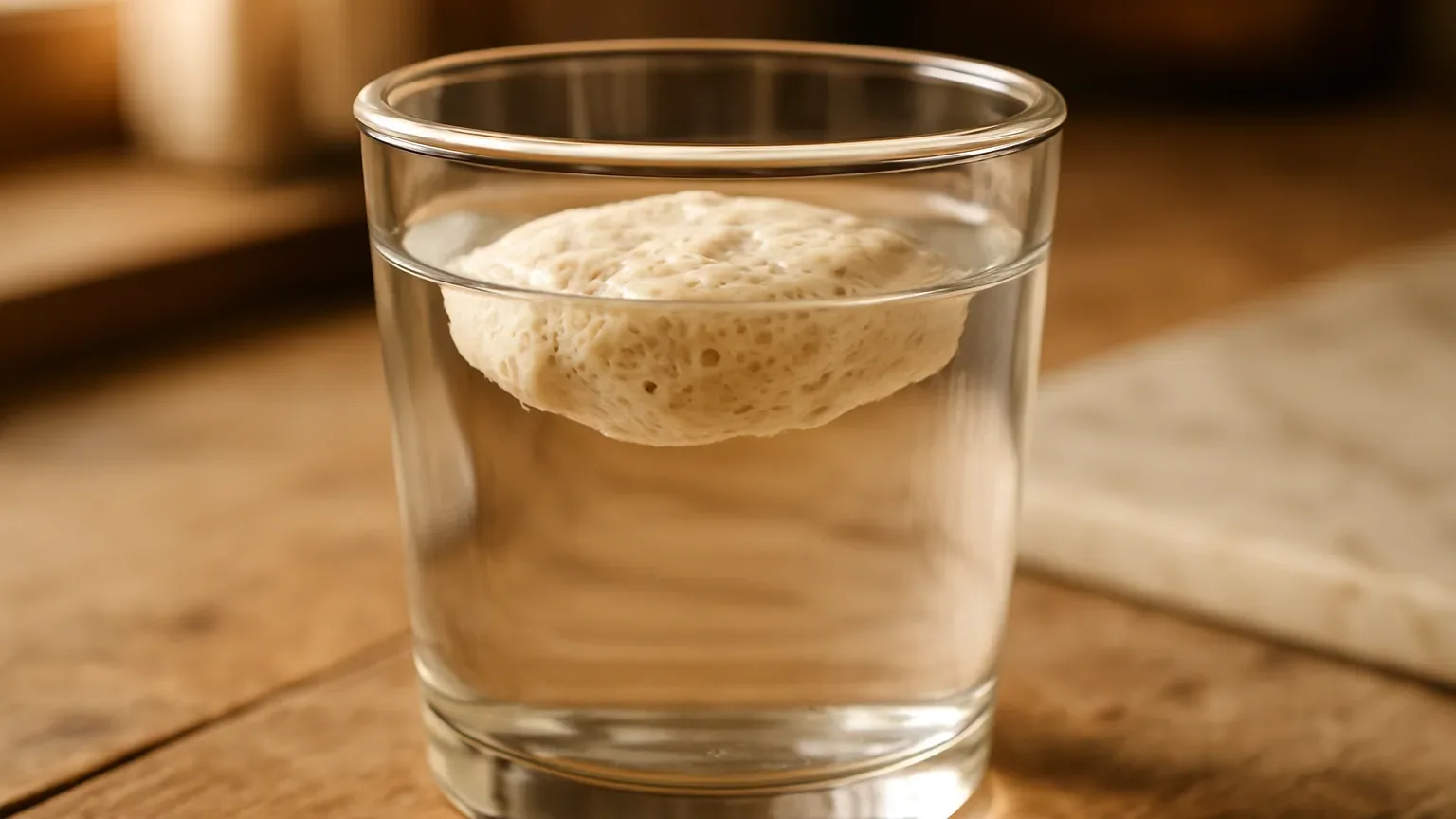
How to Use the Float Test Sourdough Method
Master the float test sourdough method to check starter strength and activity. Bubba Goodcrumb teaches you to read rise, bubbles, and float response.